Item number: 60244
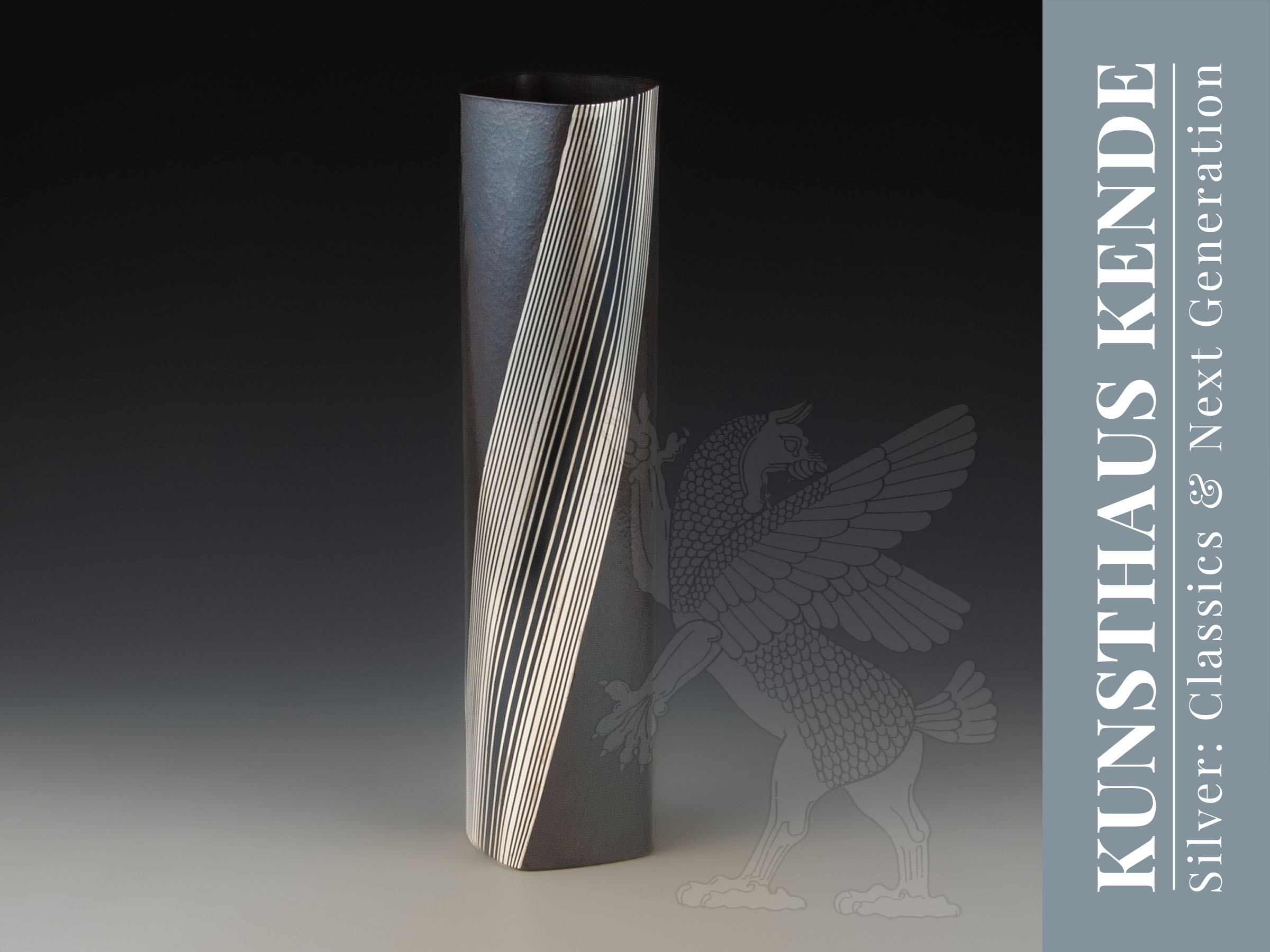
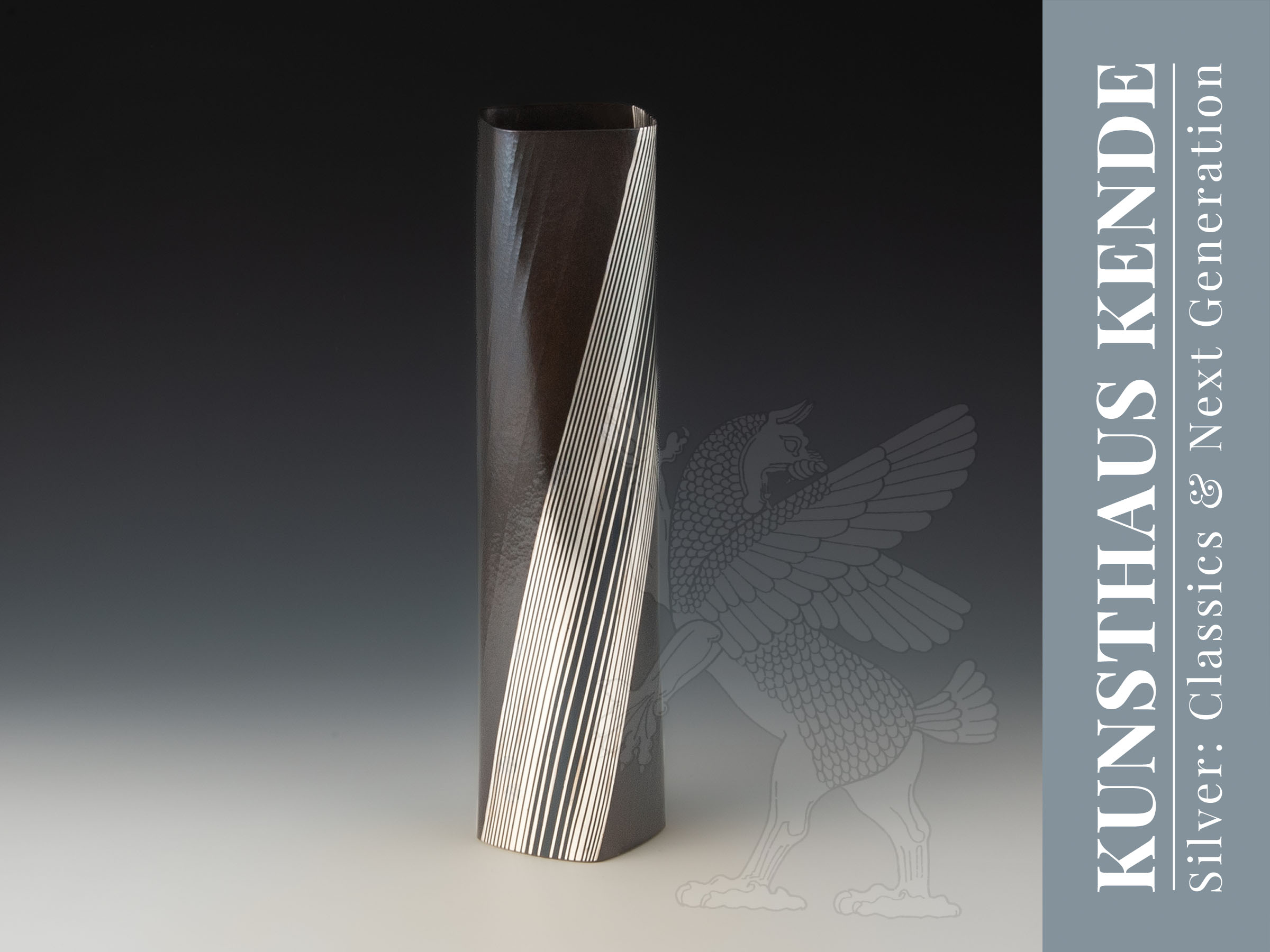
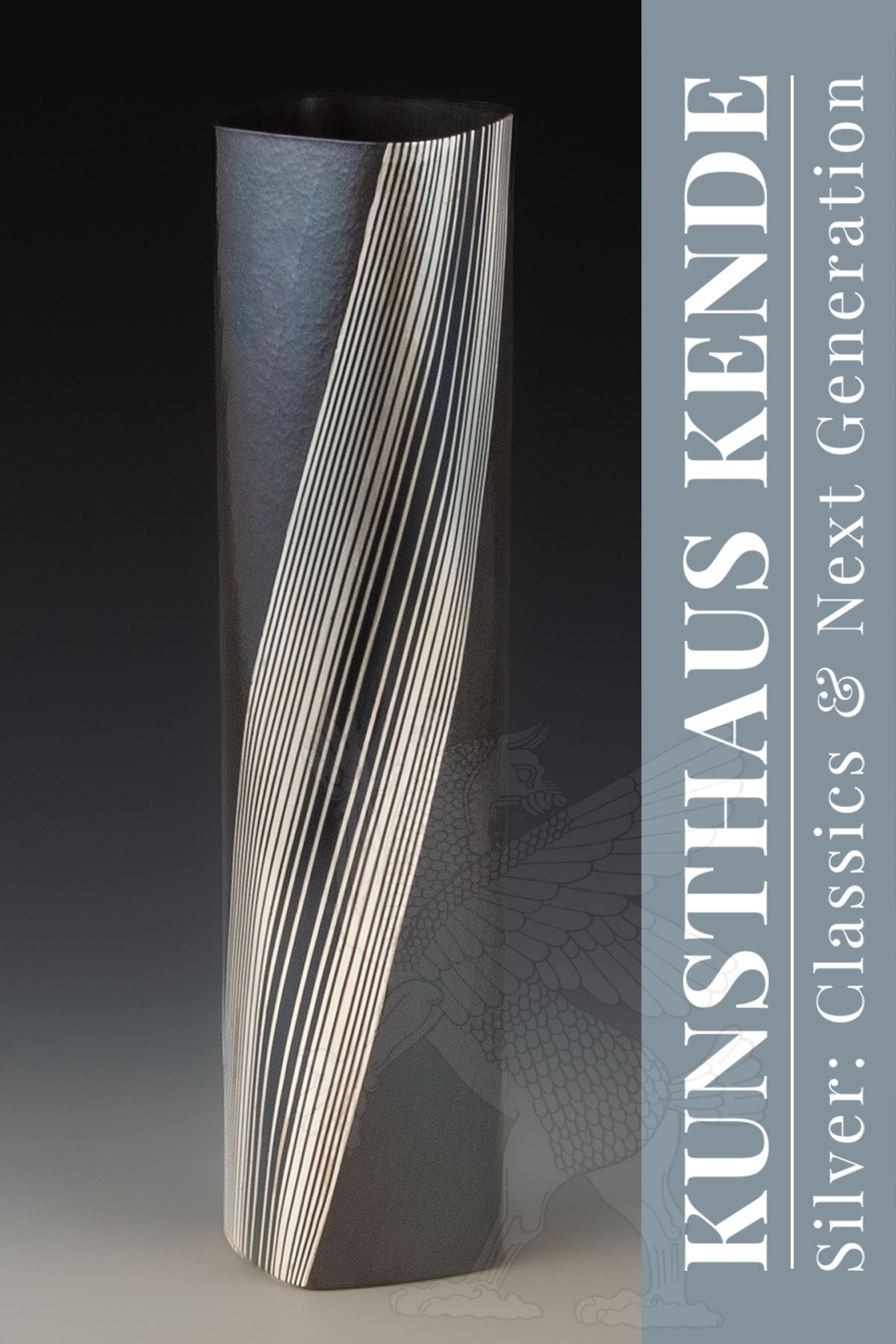
Exceptional Vase in Hagiawase 線花器 (Sen-kaki) – Vase with Linear Pattern,
Silver, Shakudō, Kuromidō, Saitama 2007,
by Noriko Hagino
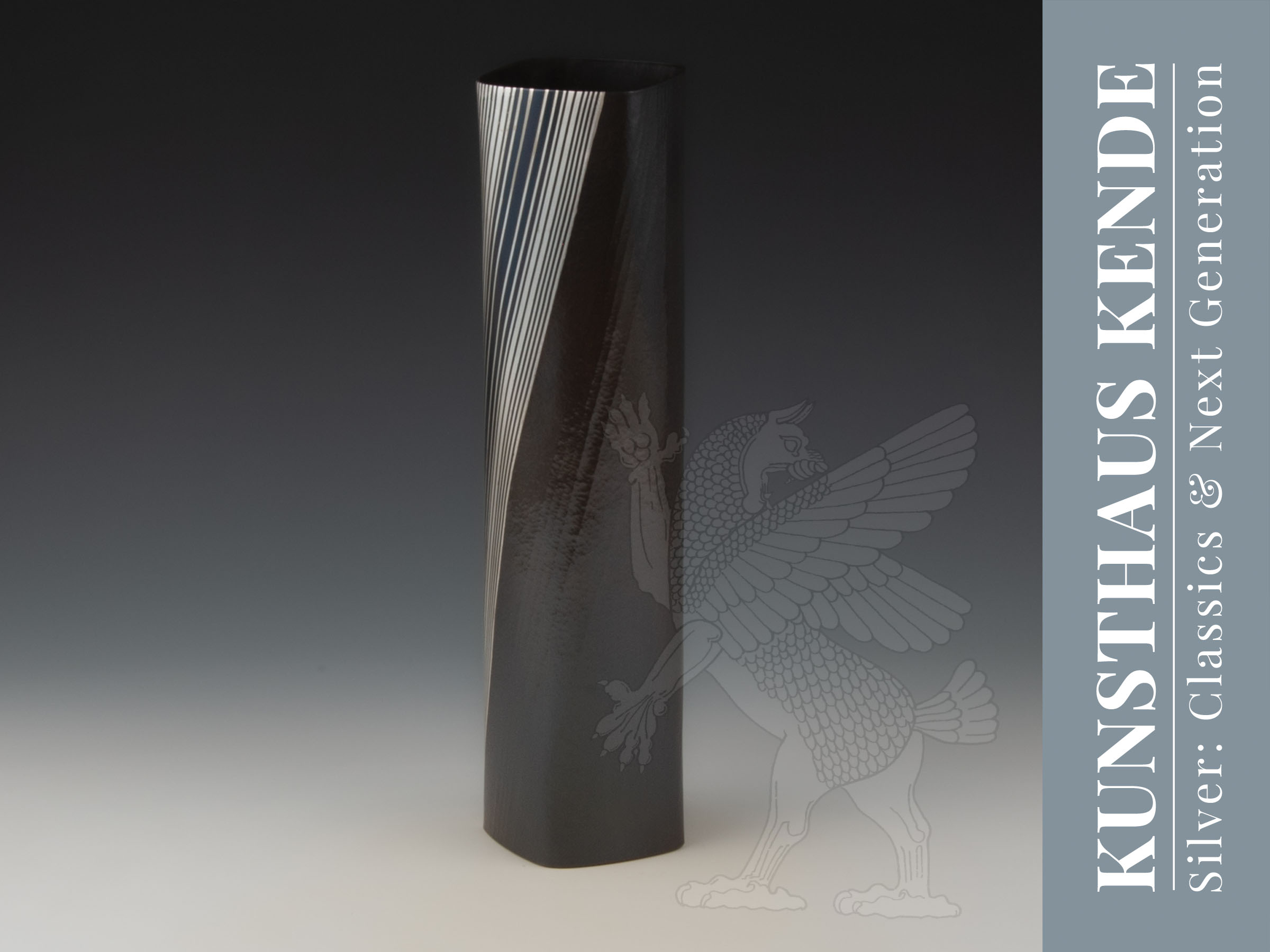
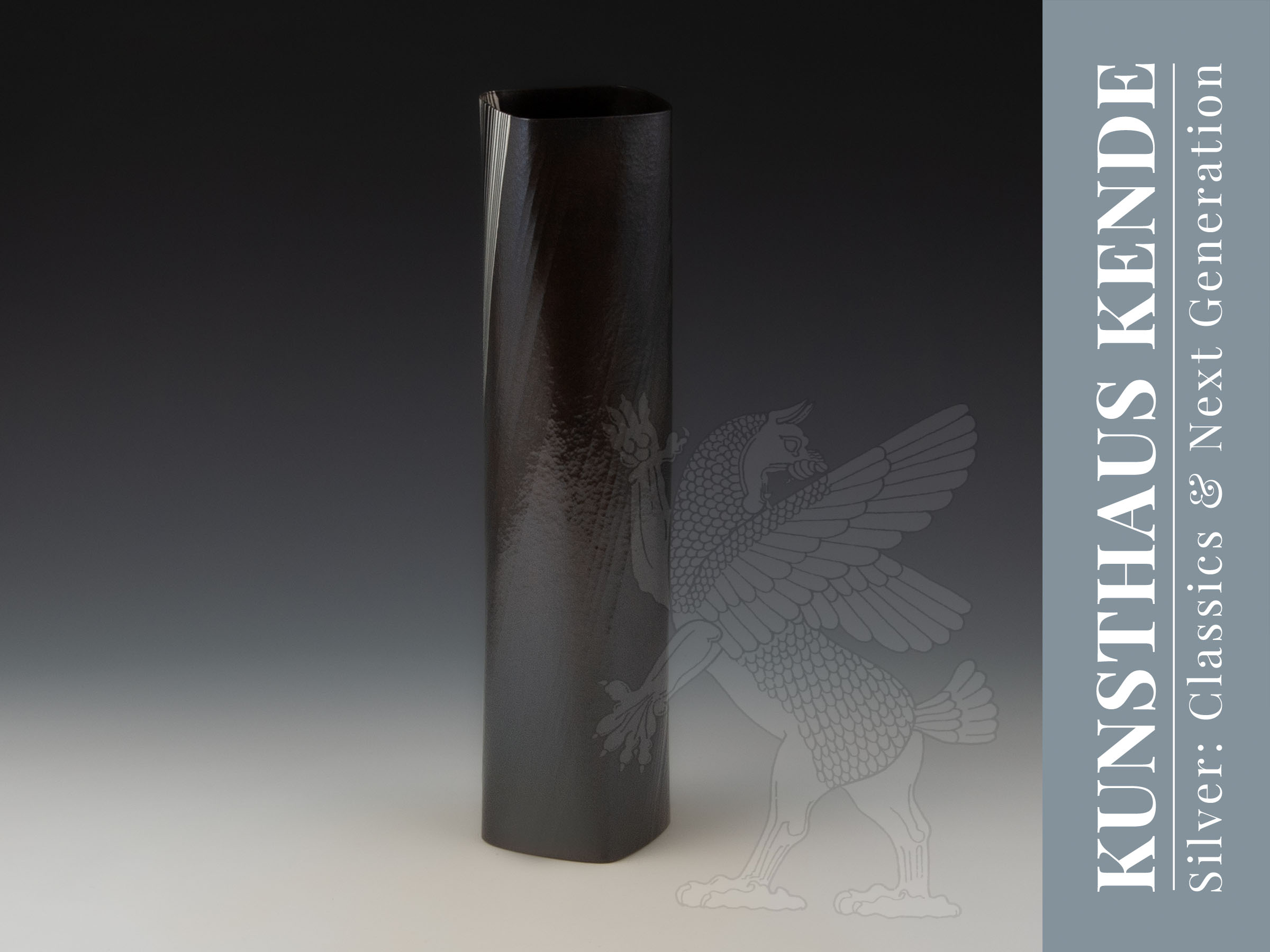
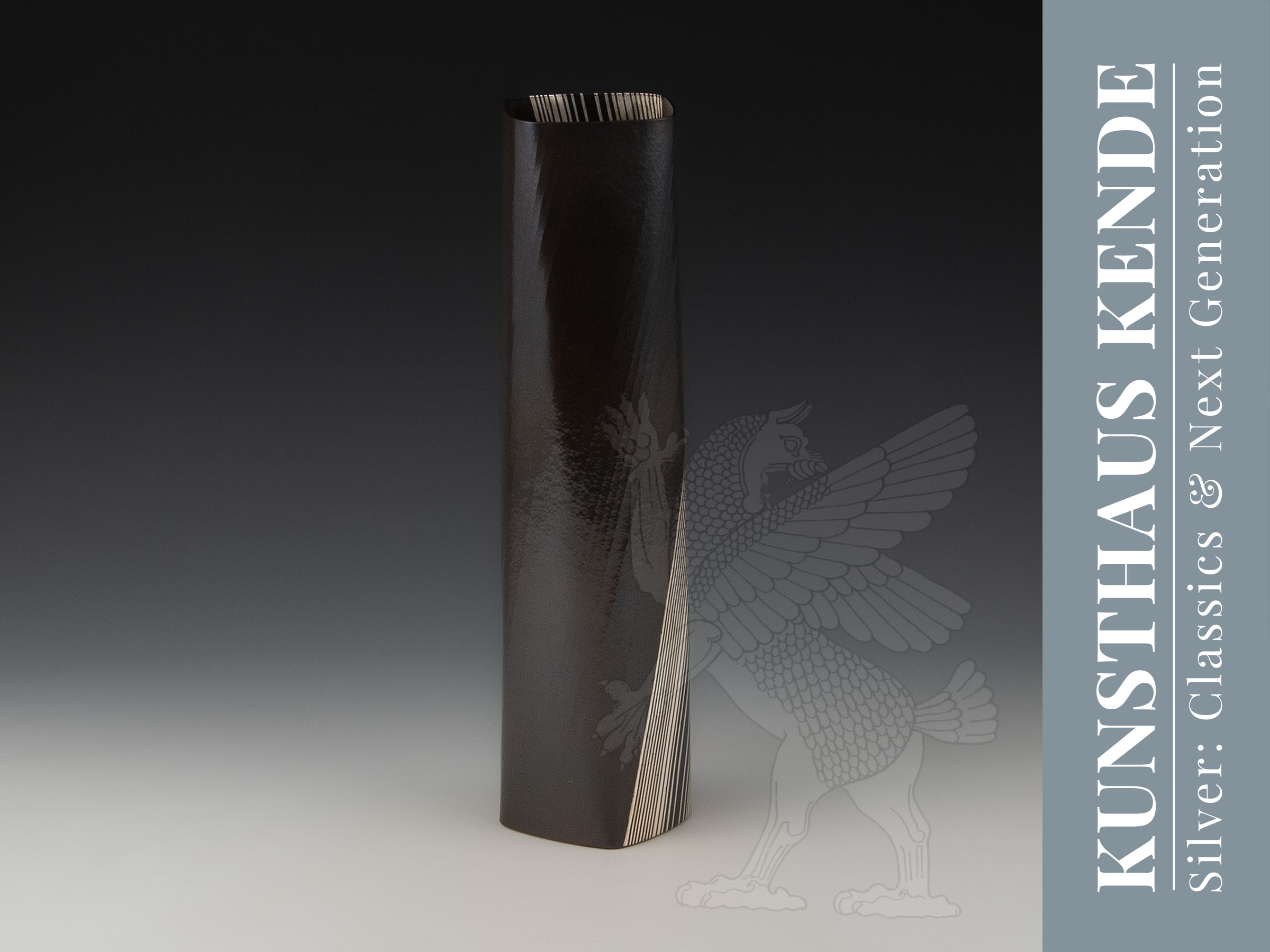
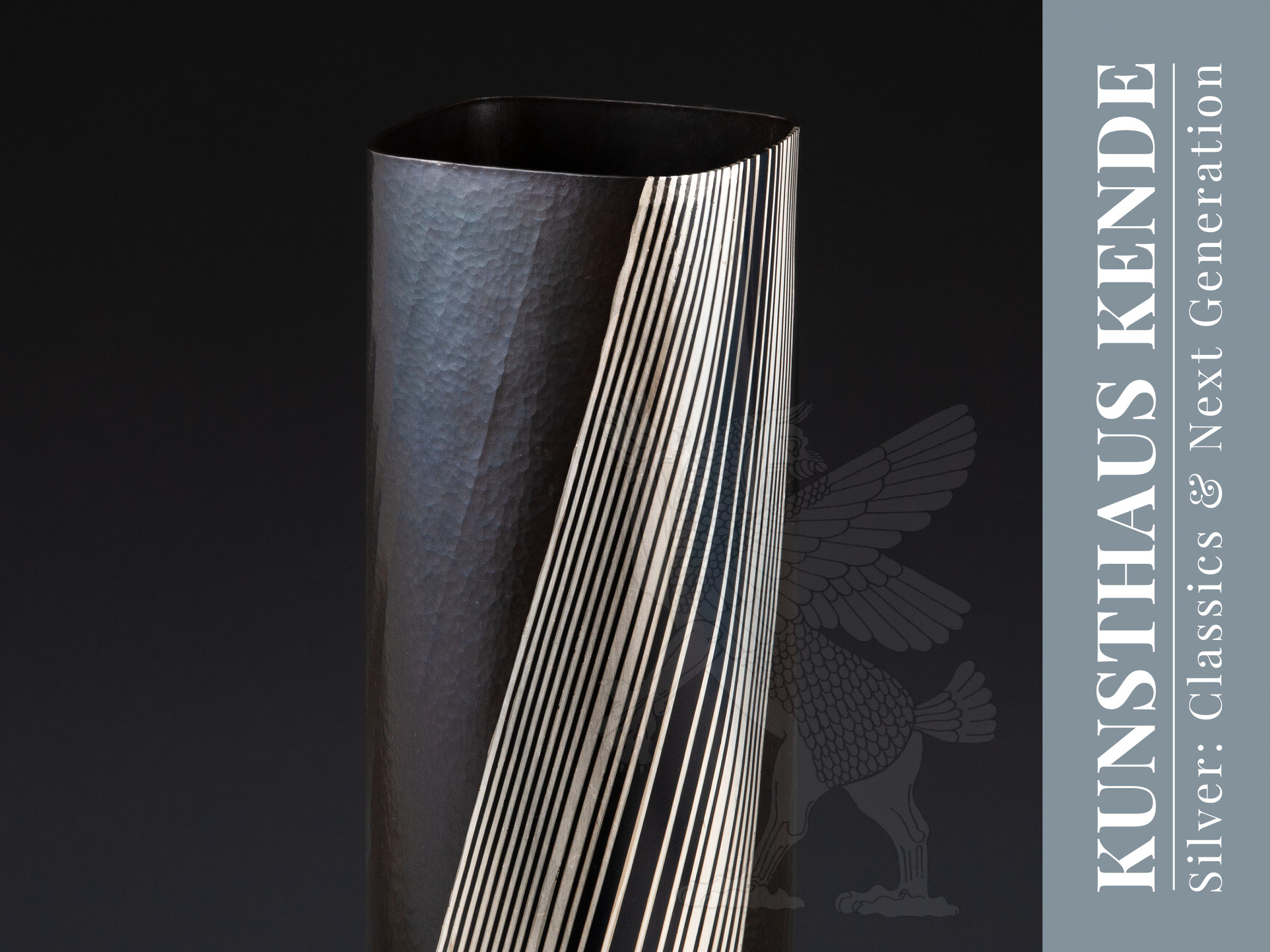
The slender, square-twisted body is entirely covered in a fine martelé texture, following an almost straight profile and terminating in the smooth, unadorned top. The front-facing surface is articulated by a delicate, subtly spiralling striped pattern, whose closely spaced, brightly emerging lines alternate with darker areas to create a captivating interplay of light and shadow. The nuanced colour effects of the metals employed – silver, shakudō and kuromidō – lend the object exceptional depth and elegance. The vessel’s clear, understated form thus stands in a striking contrast to the lively, almost dynamic colouration and surface treatment.
An exceptional work by the Japanese metal artist Noriko Hagino, in which the traditional hagiawase technique is combined with an exceptionally modern and restrained formal language.
7.1 cm / 2.8″ width, 8.4 cm / 3.3″ depth, 31.5 cm / 12.4″ height
Hagiawase (矧合) – A Traditional Japanese Metalworking Technique
The Hagiawase technique employed by Noriko Hagino is a sophisticated method of Japanese metalworking in which strips of differently coloured metals are joined by hard soldering and subsequently shaped through repeated hammering and forging. The metals most commonly used include silver, shakudō – a copper-gold alloy with a characteristic dark patina – and kuromidō, blackened copper.
The distinctive feature of this technique lies in the repeated alternation between soldering and hammering. The individual metal strips are first carefully arranged, secured and gradually soldered together. The resulting composite surfaces are then shaped using wooden and metal hammers on specialised stakes. As the different metals respond differently to heat and mechanical stress, each stage of the process requires a high degree of experience and precision. Repeated soldering, forging and finishing are necessary to achieve a permanently stable bond and a uniform surface.
The Hagiawase technique derives its distinctive effect from the interplay of the different metal colours. The precisely assembled strips form a continuous, vividly structured linear pattern, whose flow and rhythm are largely determined by the subsequent shaping process. Only in the final stages, through careful grinding and the traditional colouring process using a niiro bath, do the metals acquire their characteristic hues and the soldered joints become fully integrated into the overall design.
Hagiawase thus combines the structural precision of an elaborate joining technique with the artistic possibilities of traditional Japanese metal forming. Mastery of the process requires not only an extensive understanding of the properties of the materials but also a highly developed spatial imagination, as the initially flat arrangement of lines acquires its final three-dimensional appearance only through the hammering and shaping process.
Noriko Hagino (萩野紀子) – Education and Artistic Career
Born in 1949 in Gyōda, Saitama Prefecture. In 1971, she completed the advanced course at Musashino Art Junior College. In 1975, she began her artistic training under Shirō Sekiya (1907–1994), one of Japan’s most distinguished metal artists and a recipient of the title “Living National Treasure”.
Through her engagement with traditional Japanese metalworking, Hagino developed an individual artistic language, focusing in particular on the techniques of metal forming (鍛金, tankin) and the joining of dissimilar metals (矧合せ, hagiawase). Her work is characterised by the compelling interplay of differently coloured metals, whose linear patterns and rhythmic arrangements she employs as essential elements of her artistic expression.
Her work has received numerous awards at major Japanese exhibitions of arts and crafts. These include the Encouragement Award at the Shinshō Kōgei Exhibition in 1995, the Takada Makoto Prize at the Saitama Prefectural Exhibition in 1999, and the Japan Kōgei Association Award at the 63rd Japan Traditional Kōgei Exhibition in 2016. In 2004, her work was presented as part of the exhibition “Contemporary Japanese Metalwork” at the Royal Danish Museum of Decorative Art in Copenhagen.
Hagino is a full member of the Japan Kōgei Association (日本工芸会正会員) and is recognised as one of the leading figures in contemporary Japanese metal art.
PRICE ON APPLICATION