Item number: 60242
Exceptional Vase in Shidō 陽炎 (Kagerō) – Heat Haze,
Violet copper,
Tōkyō 2018 by Yasuyoshi Matsumoto
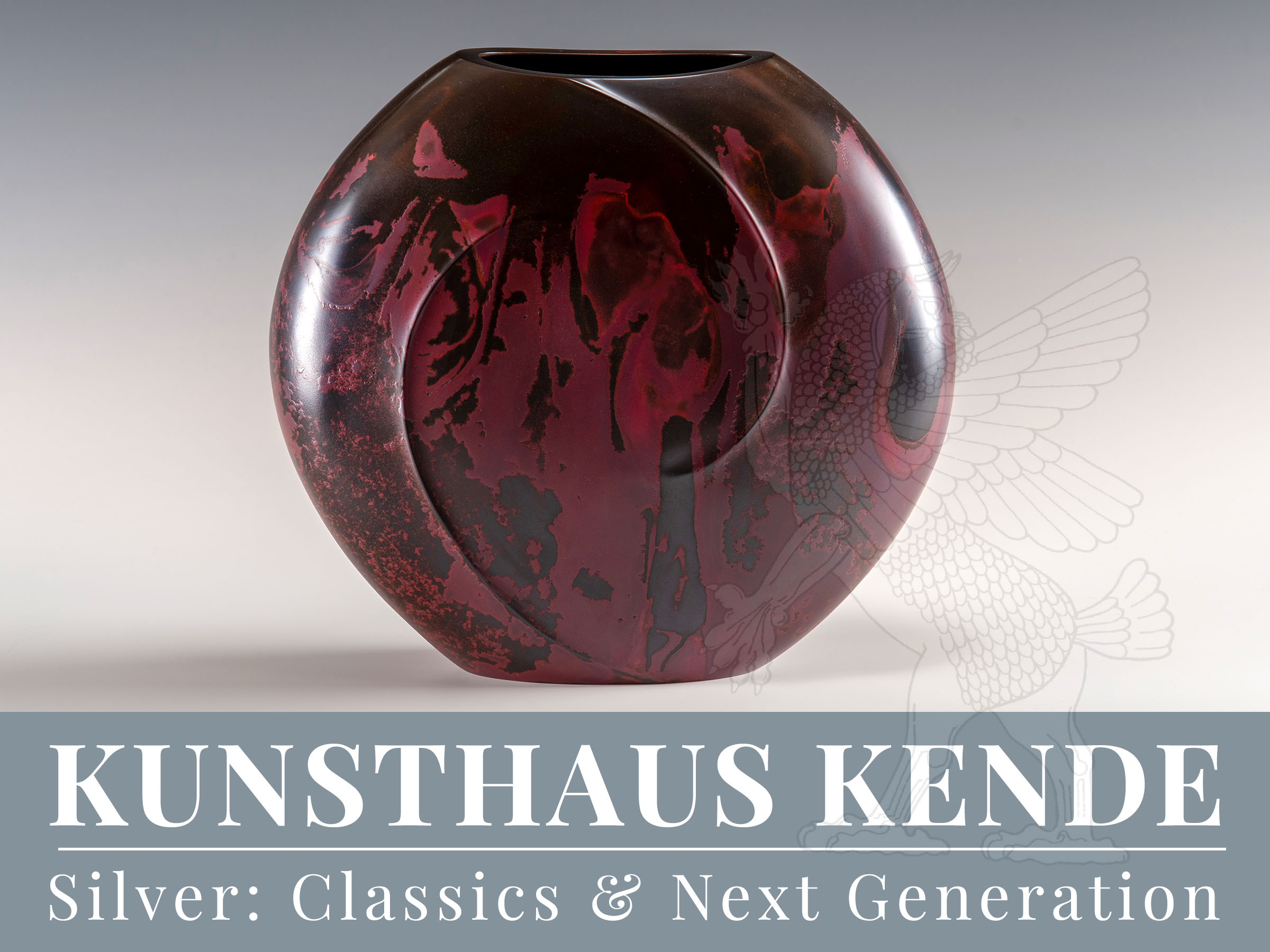
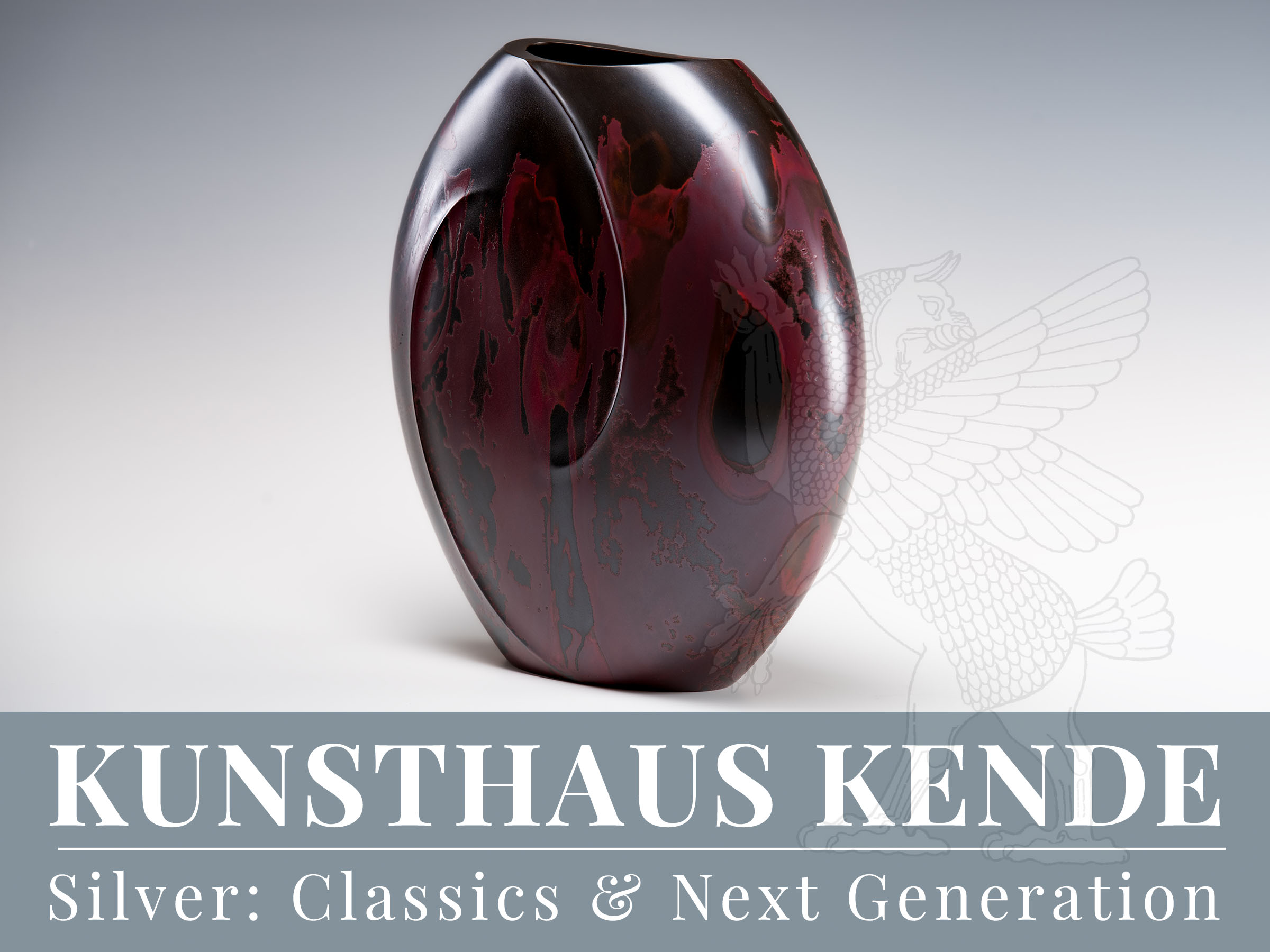
The body, shaped as a flattened, approximately spherical form with a slightly flattened base and upper surface, is provided with a narrow horizontal opening. The plastically modelled front and back are articulated by organically flowing depressions and raised contours.
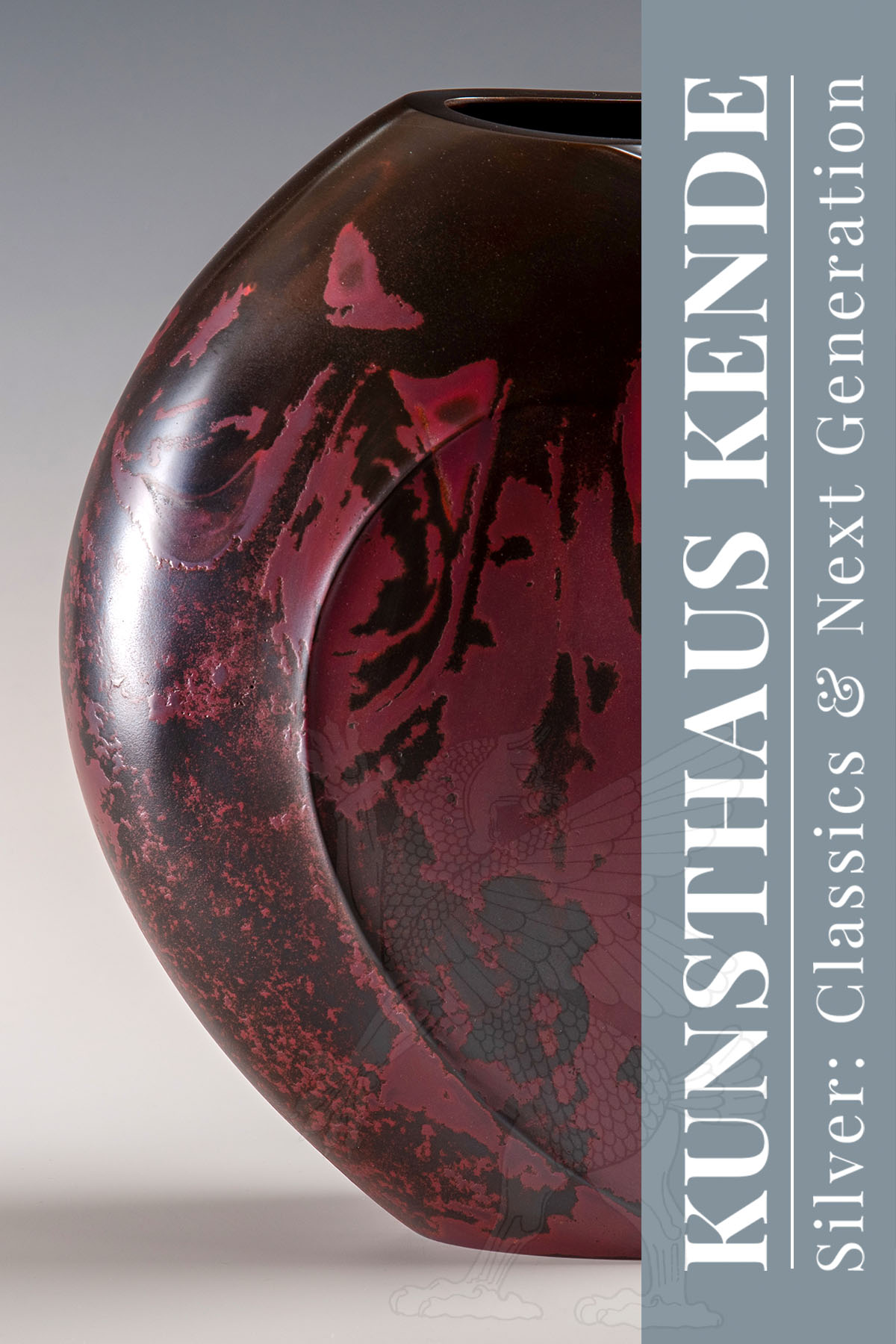
The surface displays a finely differentiated palette of dark red and violet tones, interspersed with black areas and occasional metallic lustre. The irregular, cloud-like and in places mottled surface texture creates a lively contrast with the smoother, more highly reflective areas.
31.0 cm / 12.2″ length, 11.0 cm / 4.3″ width, 28.0 cm / 11.0″ height
The interplay of the closed volumetric form, asymmetrical surface articulation and nuanced patination lends the object its distinctly sculptural character. The vase is executed in Shidō (紫銅), a traditional Japanese copper alloy.
Shidō (紫銅) is a traditional Japanese copper alloy distinguished by its characteristic dark reddish-violet to purplish surface. Its nuanced coloration is achieved through a carefully controlled metallurgical and chemical treatment carried out in the heat of pine charcoal. Shidō is distinguished by its lively patina and subtle gradations of colour, which lend each object its own individual appearance.
The Japanese metal artist Yasuyoshi Matsumoto
The Japanese metal artist Yasuyoshi Matsumoto (松本育祥, born 1982) works at the intersection of traditional Japanese metalworking and contemporary form. At the centre of his artistic practice is the technique of metal casting, Chūkin (鋳金), which he employs primarily in the creation of vessels, bowls and sculptural objects.
His works are distinguished by an exceptionally sensitive approach to the material properties of copper alloys. Among the materials he uses are Shidō (紫銅), a reddish-violet copper alloy, Shudō (朱銅), a copper alloy with reddish hues, and Rōgin (朧銀), a traditional copper alloy characterised by its silvery-grey appearance.
The coloration of his works is achieved not merely through the choice of metal, but through a carefully controlled and elaborate process involving the application of heat and subsequent chemical reactions. By precisely heating the metal and treating its surfaces through subsequent processes, Matsumoto develops differentiated colour tones and richly nuanced patinations. The surface thus becomes an independent element of artistic expression, bringing forth the depth, lustre and vibrant structure of the material. His working process consequently combines two distinct aspects of craftsmanship: the shaping of the object through casting and the deliberate development of its surface appearance through thermal and chemical treatments. It is only through the interplay of these processes that the metal acquires its characteristic appearance.
In this way, Yasuyoshi Matsumoto carries a Japanese craft tradition passed down through generations into an independent contemporary artistic language. His works are not merely functional vessels or decorative objects, but rather explorations of the relationship between material, light and colour.