Item number: 60235
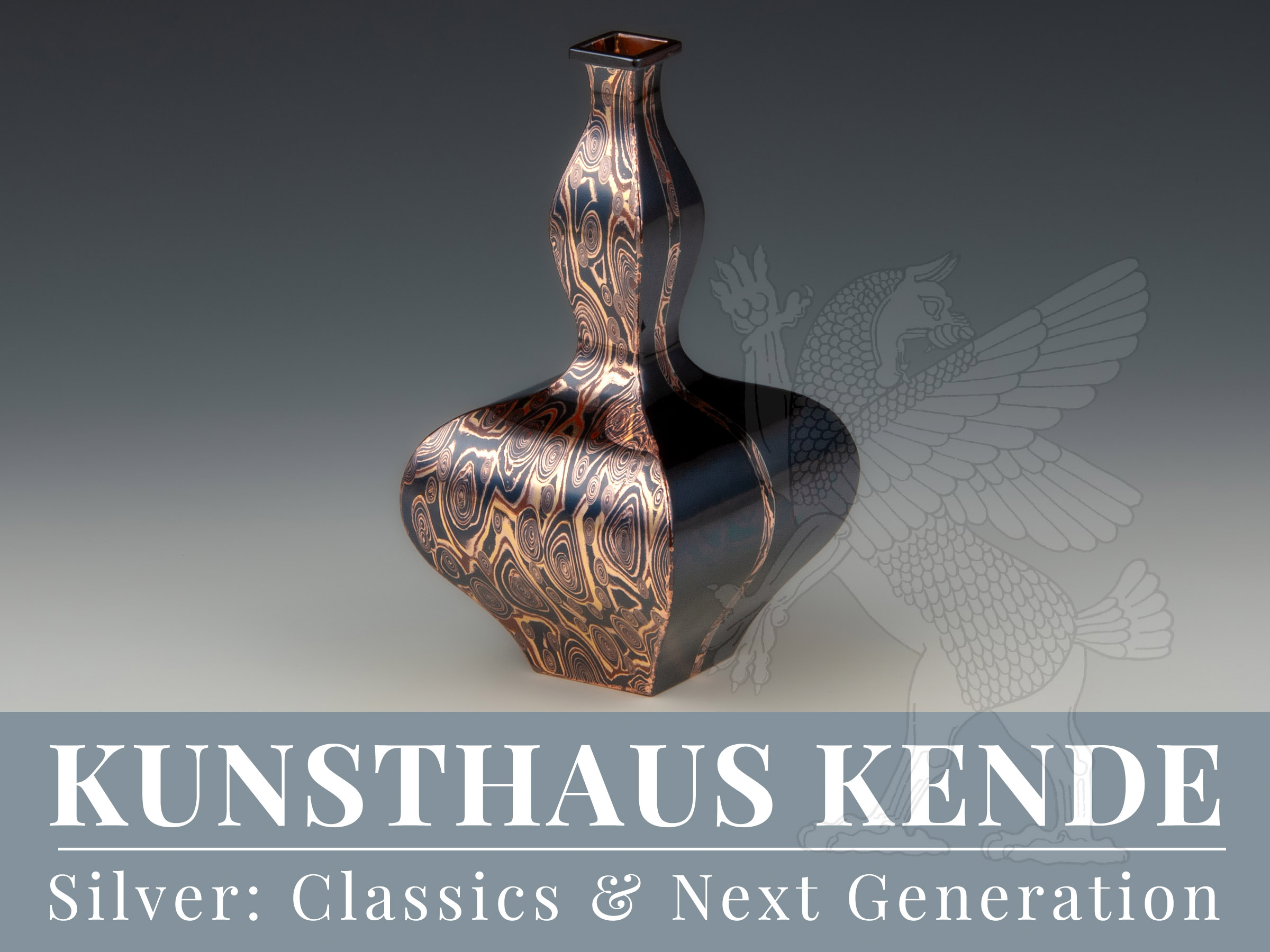
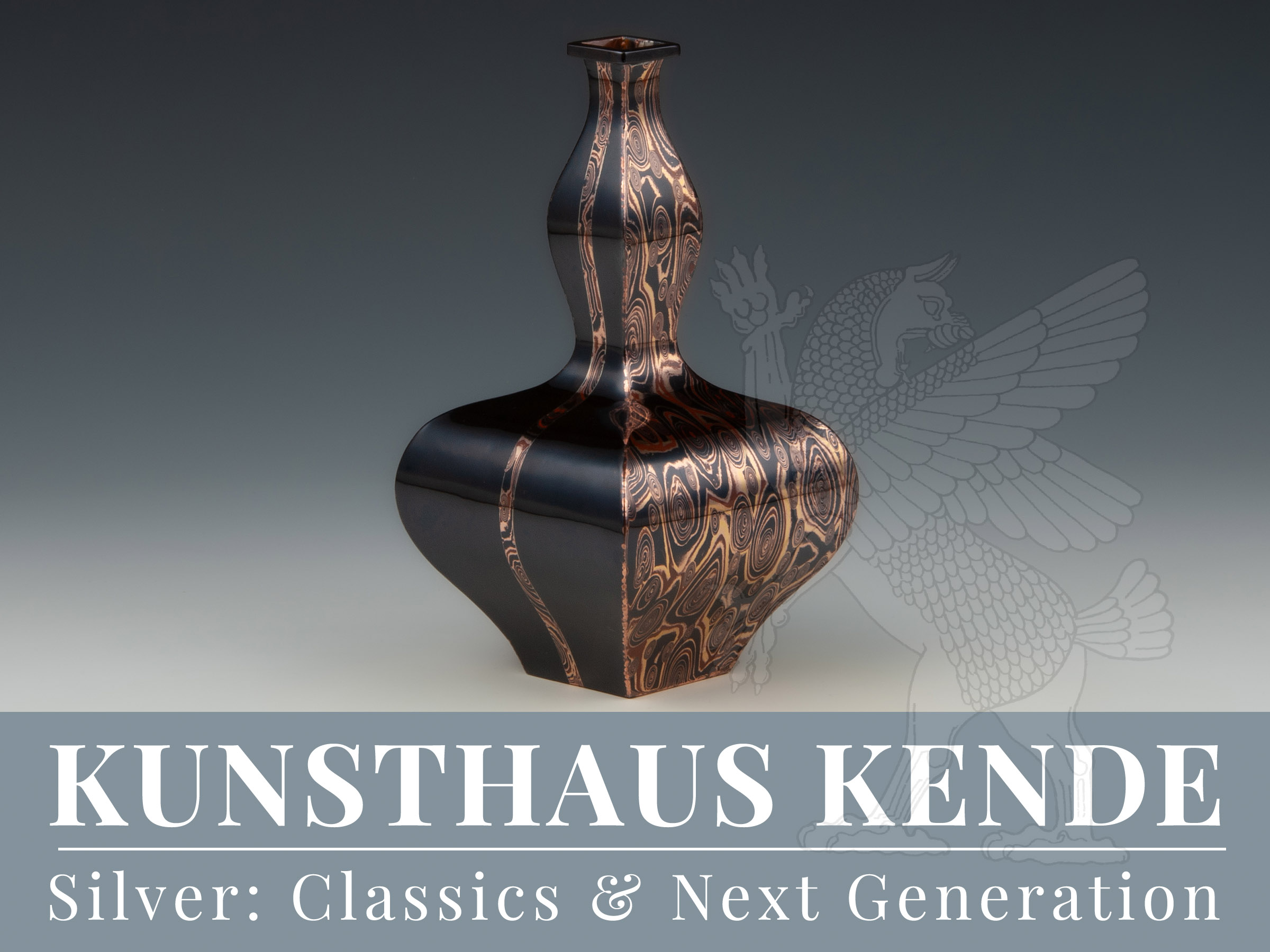
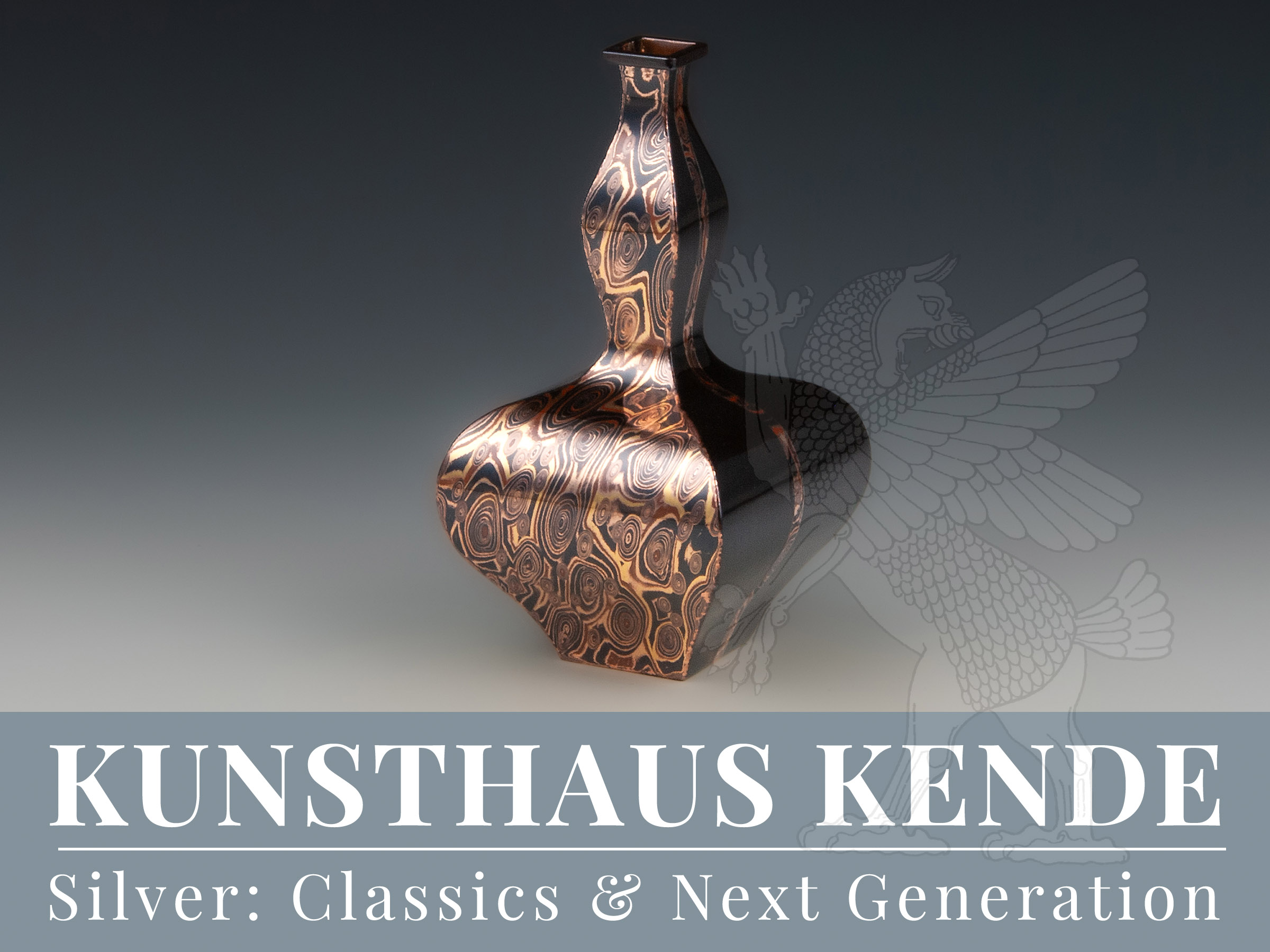
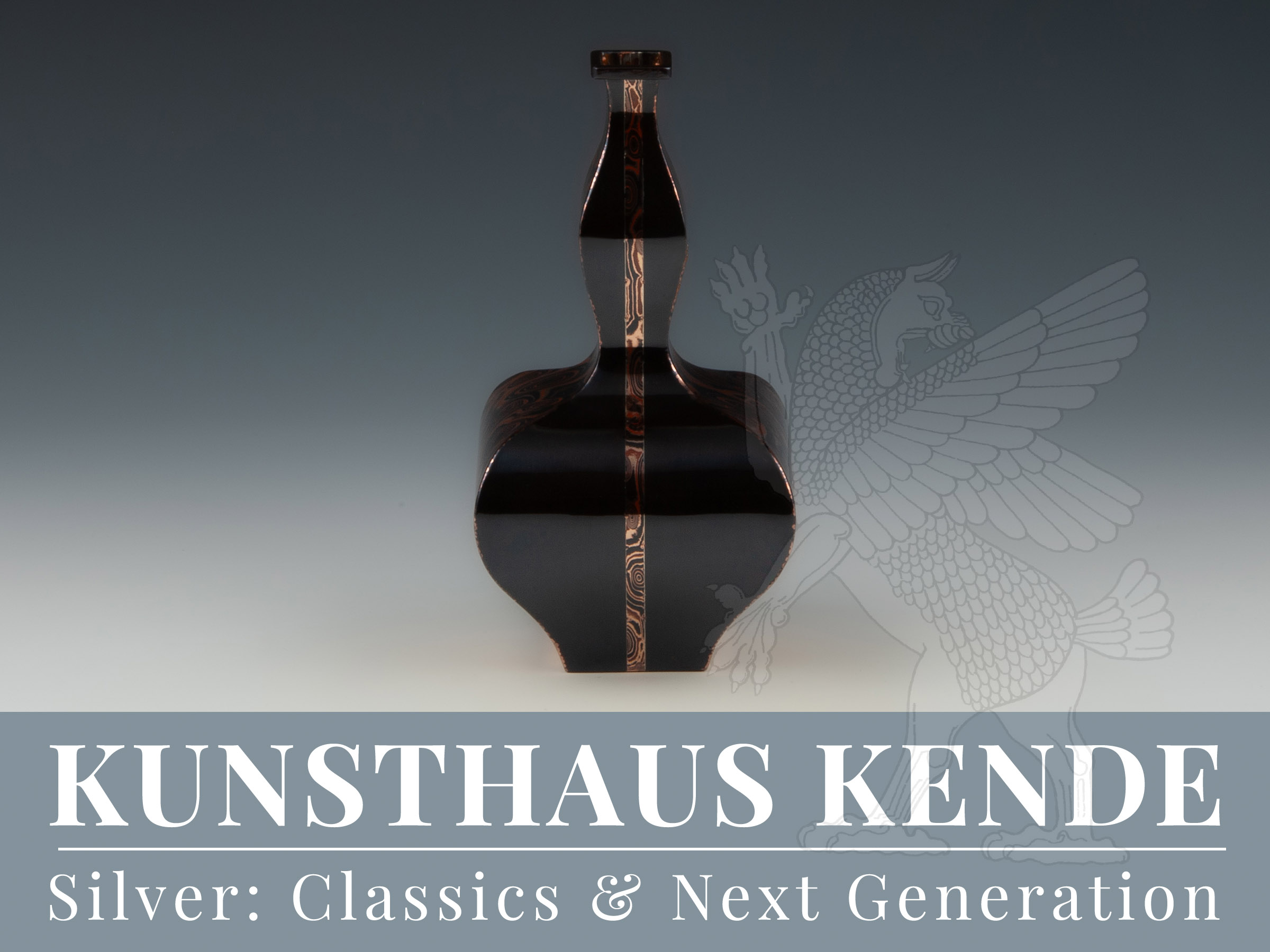
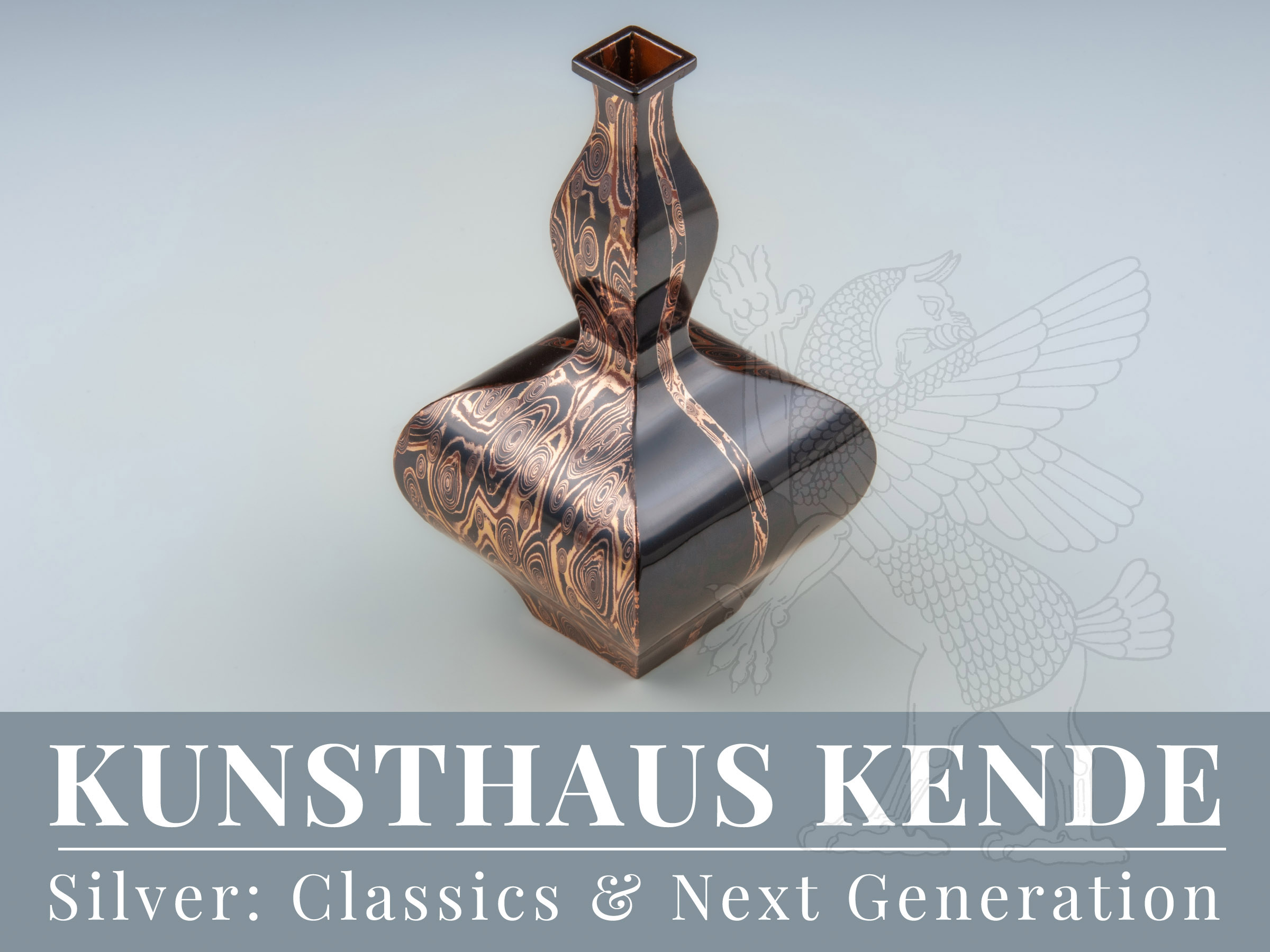
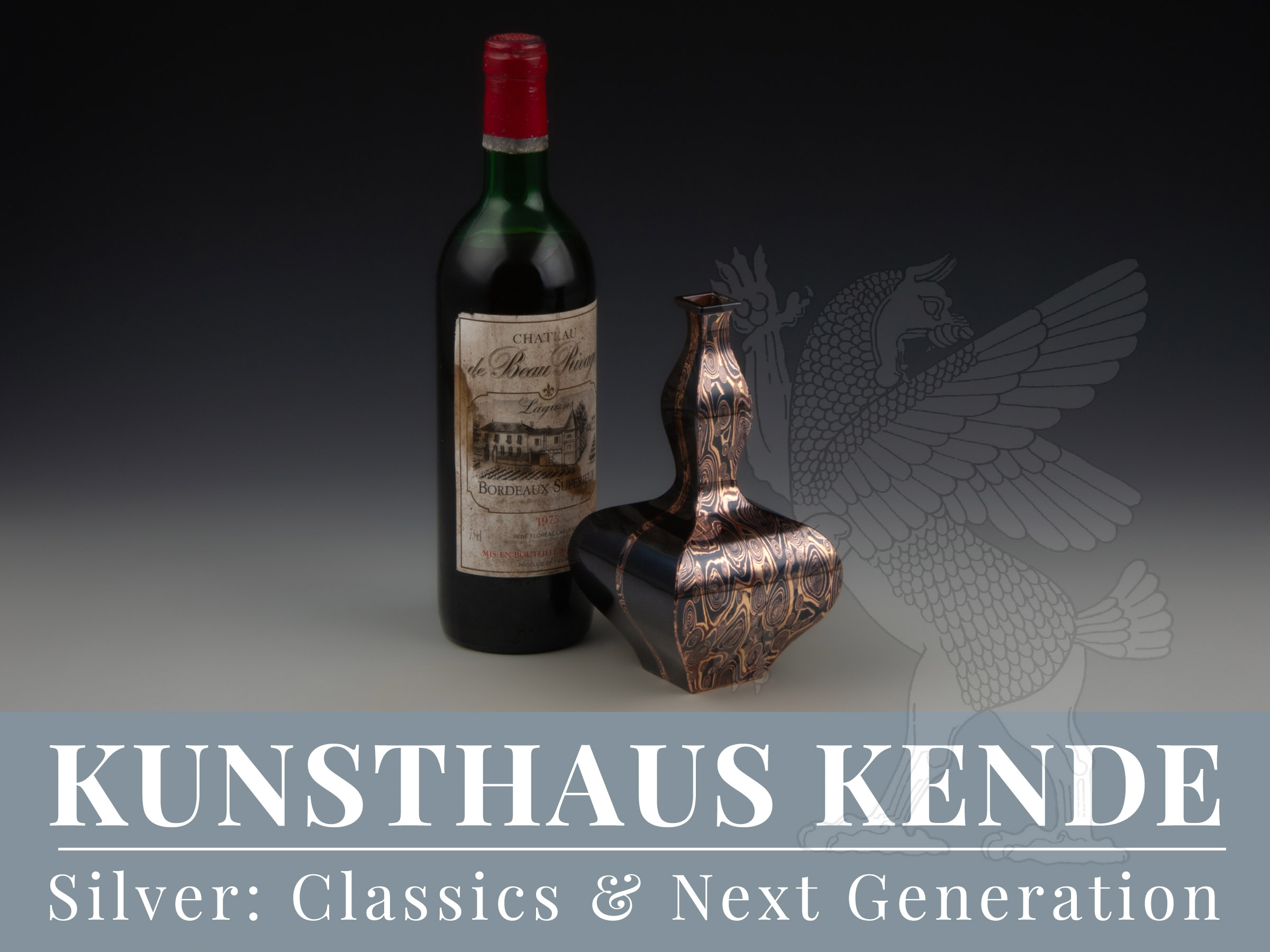
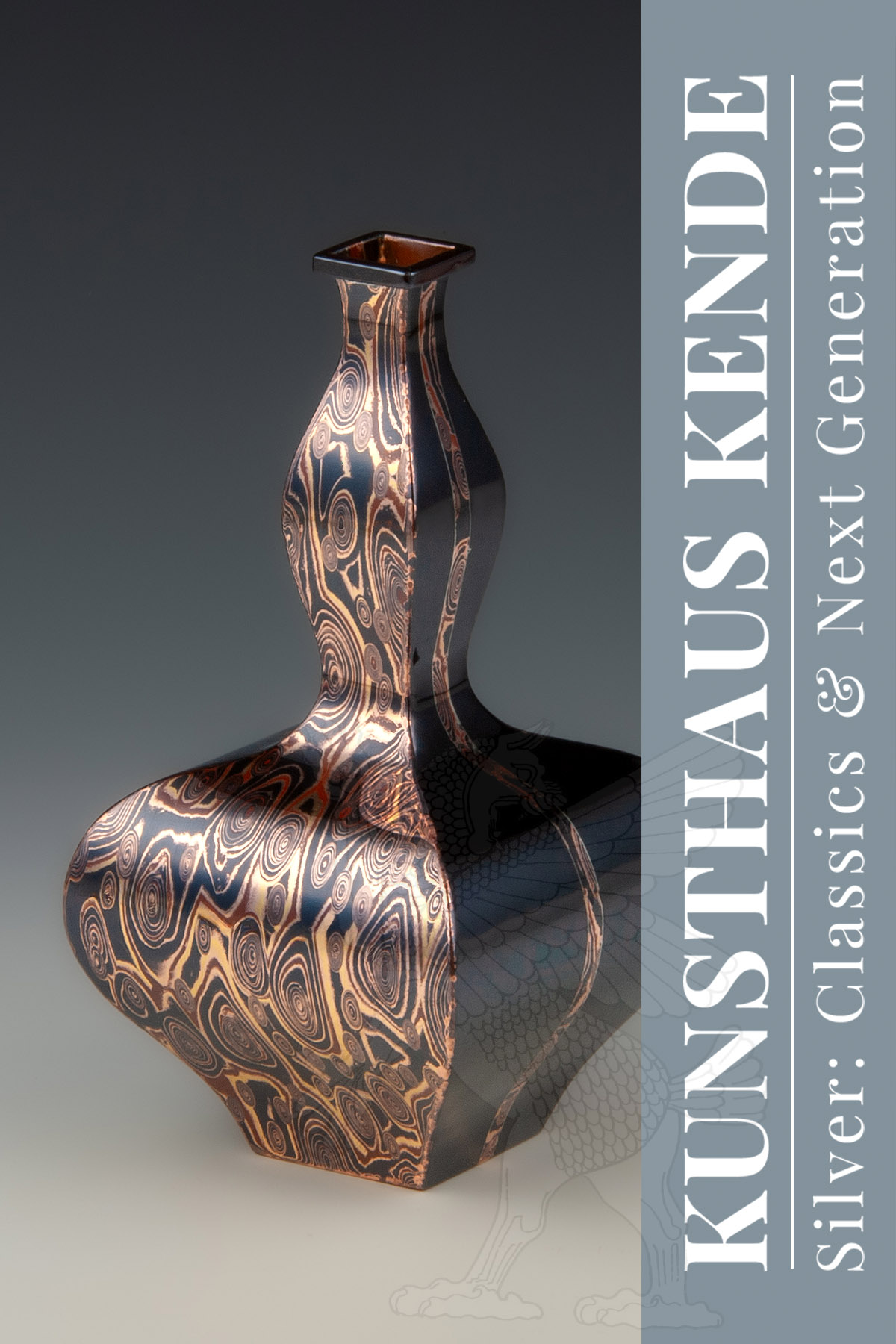
A contemporary Kin-Gin-Dō Mokume-gane vase ひょうたん (Hyōtan),
Fine gold, fine silver, copper, Shakudō,
Akita 2024 by Bikō Hayashi
Square in section, the vase rising from the flat base into a broad, gracefully swelling body, while the neck echoes this subtle curvature before terminating in the square rim. The front and reverse are executed entirely in Kin-Gin-Dō Mokume-gane, whereas the sides are fashioned from Shakudō – the traditional Japanese alloy of copper and gold – each inlaid with a central vertical band of Kin-Gin-Dō Mokume-gane. The harmonious interplay between these contrasting surfaces enhances the sculptural character of the vessel while revealing the remarkable refinement of Bikō Hayashi’s mastery of Japanese metalwork, hammer forming (tankin) and Mokume-gane.
9.0 cm / 3.54″ width, 9.0 cm / 3.54″ height, 18 cm / 7.08″ tall
The Hyōtan (瓢箪), or bottle gourd, is among Japan’s oldest and most auspicious symbols of good fortune. Owing to its abundance of seeds, it has long represented fertility, prosperity and the richness of life. Its rounded form is equally associated with the safeguarding of treasured possessions and is traditionally regarded as a vessel capable of containing happiness and benevolent spiritual energy. Throughout the history of Japanese art, the Hyōtan has therefore appeared as an enduring emblem of longevity, good fortune and spiritual protection, uniting profound symbolic meaning with an elegant organic form.
Kin-Gin-Dō Mokume-gane – The Rediscovery of a Lost Art of Japanese Metalwork
Kin-Gin-Dō Mokume-gane (金銀銅杢目金; literally “gold-silver-copper wood-grain metal”) ranks among the most sophisticated achievements of Japanese metalwork. Developed during the early Edo period some four centuries ago, the technique was originally reserved for the finest sword mountings and ceremonial fittings. Following the decline of the Japanese sword tradition, however, this remarkable craft was almost entirely lost.
Its production requires layers of gold, silver, copper and traditional Japanese alloys such as Shakudō to be permanently fused under carefully controlled heat and pressure. Through an extraordinarily demanding process of repeated forging, hammer forming, folding, shaping and selective carving of the surface, intricate patterns emerge that resemble the natural grain of wood. No two works are ever identical; each possesses its own unique and irreproducible surface.
The knowledge required to create Kin-Gin-Dō Mokume-gane had been transmitted exclusively through oral instruction by generations of master craftsmen, leaving virtually no written documentation. Over more than four decades, Bikō Hayashi devoted himself to researching this lost technique. He became the first artist successfully to reconstruct not only the manufacturing process itself but also the precise compositions of the traditional metal alloys employed.
Hayashi subsequently advanced the historical technique far beyond its original purpose. Liberating it from the exclusive realm of sword fittings, he established Mokume-gane as a medium for contemporary artistic expression, creating sculptural vessels, art objects and monumental forms of exceptional refinement. In recognition of his outstanding contribution to the preservation and advancement of this unique cultural tradition, he was officially acknowledged by Akita Prefecture as a Preserver of Intangible Cultural Heritage. According to current scholarship, Bikō Hayashi remains the only artist to have fully mastered this particular form of Kin-Gin-Dō Mokume-gane.
Bikō Hayashi – Master of Contemporary Japanese Metalwork
Born in 1937, Bikō Hayashi is widely regarded as one of the foremost masters of contemporary Japanese metalwork. His work unites the centuries-old traditions of Japanese kōgei with a distinctly modern sculptural language. He achieved international recognition through his exceptional command of tankin, the demanding Japanese art of hammer forming, repoussé and the raising of sheet metal.
Hayashi commenced his artistic training at the age of ten in the workshop of his father. This early immersion in traditional craftsmanship continues to underpin his entire artistic philosophy. Unlike many Western sculptors, Hayashi regards metal not as an inert substance but as a living material whose final form gradually emerges through thousands of carefully controlled hammer blows. Each work evolves through an unhurried, almost meditative process in which technical perfection and artistic intuition become inseparable.
During his distinguished career Hayashi became a member of numerous prestigious Japanese artistic organisations, including the Japan Kōgei Association, the country’s foremost institution dedicated to the preservation and promotion of traditional craftsmanship. His works received repeated honours at its highly regarded exhibitions, reflecting the highest level of recognition within Japan’s cultural establishment. For many decades he also served as exhibition organiser, juror and an influential advocate for the development of traditional arts and crafts in Akita Prefecture.
A defining characteristic of Hayashi’s oeuvre is the synthesis of traditional craftsmanship with contemporary sculptural design. While his early reputation was established through masterfully hammer formed stainless-steel sculptures – a material exceptionally demanding to raise by hand – he later dedicated himself to the revival of the long-forgotten art of Kin-Gin-Dō Mokume-gane.
His vessels and sculptures are distinguished by organic contours, exquisitely balanced proportions and an extraordinary sense of lightness. Plants, buds, blossoms and the rhythms of natural growth repeatedly serve as sources of inspiration, yet are never rendered literally. Instead, Hayashi transforms nature into refined abstract forms expressing movement, vitality and transience in equal measure. Every hammer mark remains visible as an integral element of the finished composition, preserving the unmistakable presence of the artist’s hand.
For his exceptional artistic achievements, Bikō Hayashi has received numerous distinctions, including the Akita Cultural Achievement Award, the Japan Kōgei Association Award, the Asahi Shimbun Prize, together with commendations from the Japanese Ministry of Education in recognition of his contribution to regional cultural life. His works are represented in important Japanese public and private collections.
Hayashi’s oeuvre embodies the very ideals that continue to define the finest traditions of Japanese metalwork: supreme technical mastery, profound respect for the material, and a creative vision that preserves historical techniques not as relics of the past, but by transforming them into living expressions of contemporary art. His silver and mixed-metal works are therefore not merely masterpieces of craftsmanship but timeless sculptures, establishing an eloquent dialogue between nature, form and material through the unique expressive possibilities of Kin-Gin-Dō Mokume-gane.