Item number: 60236
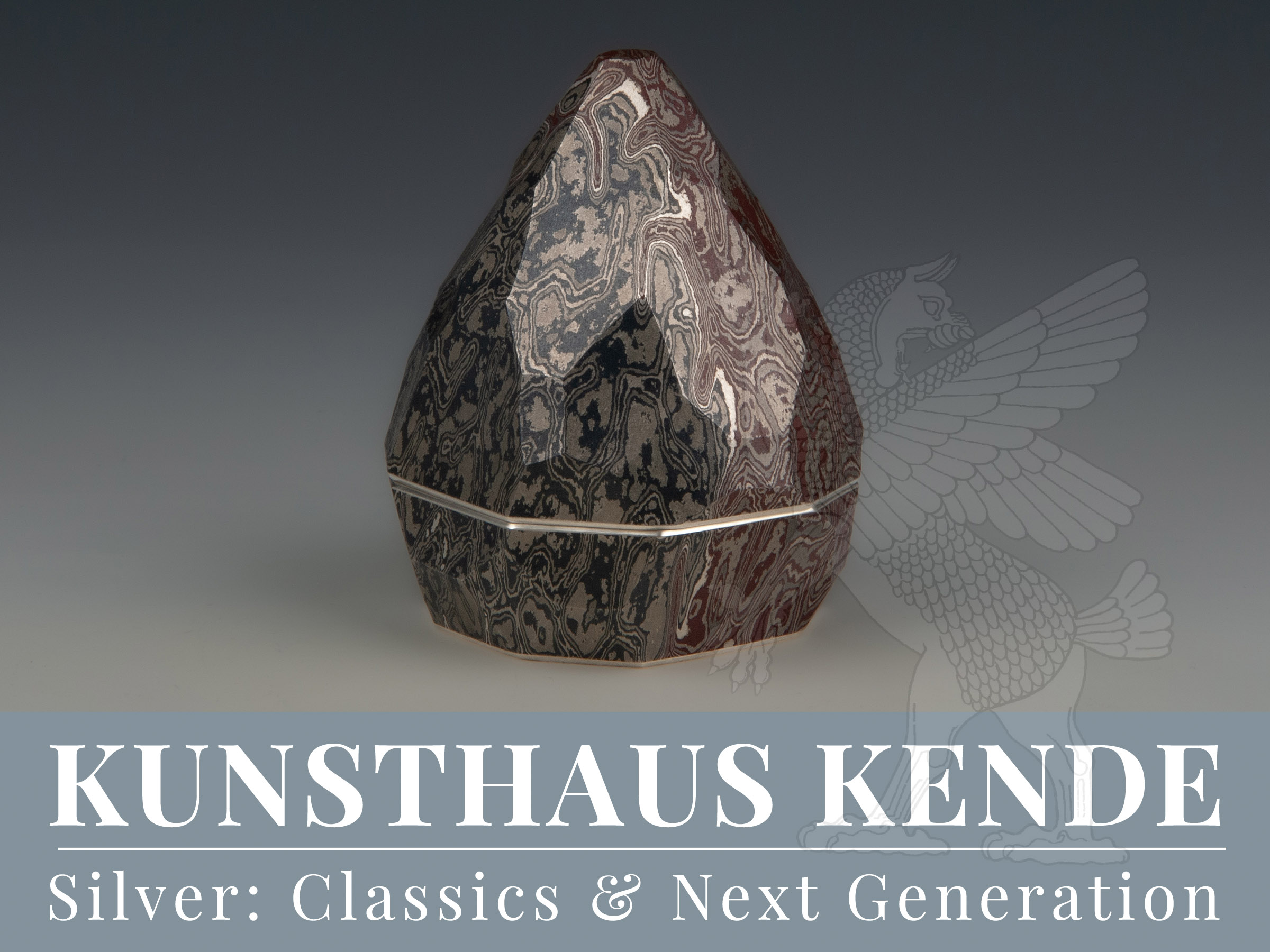
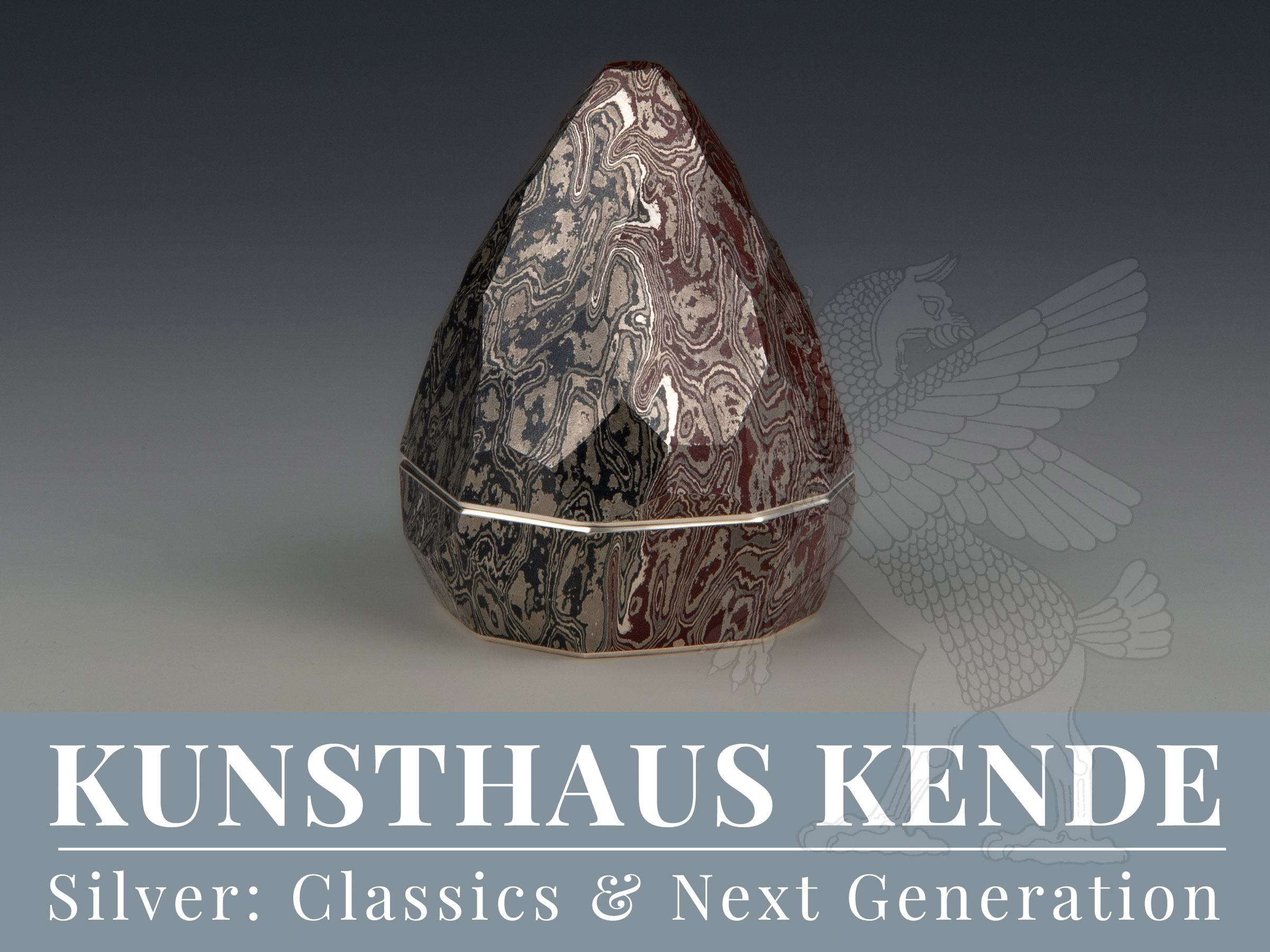
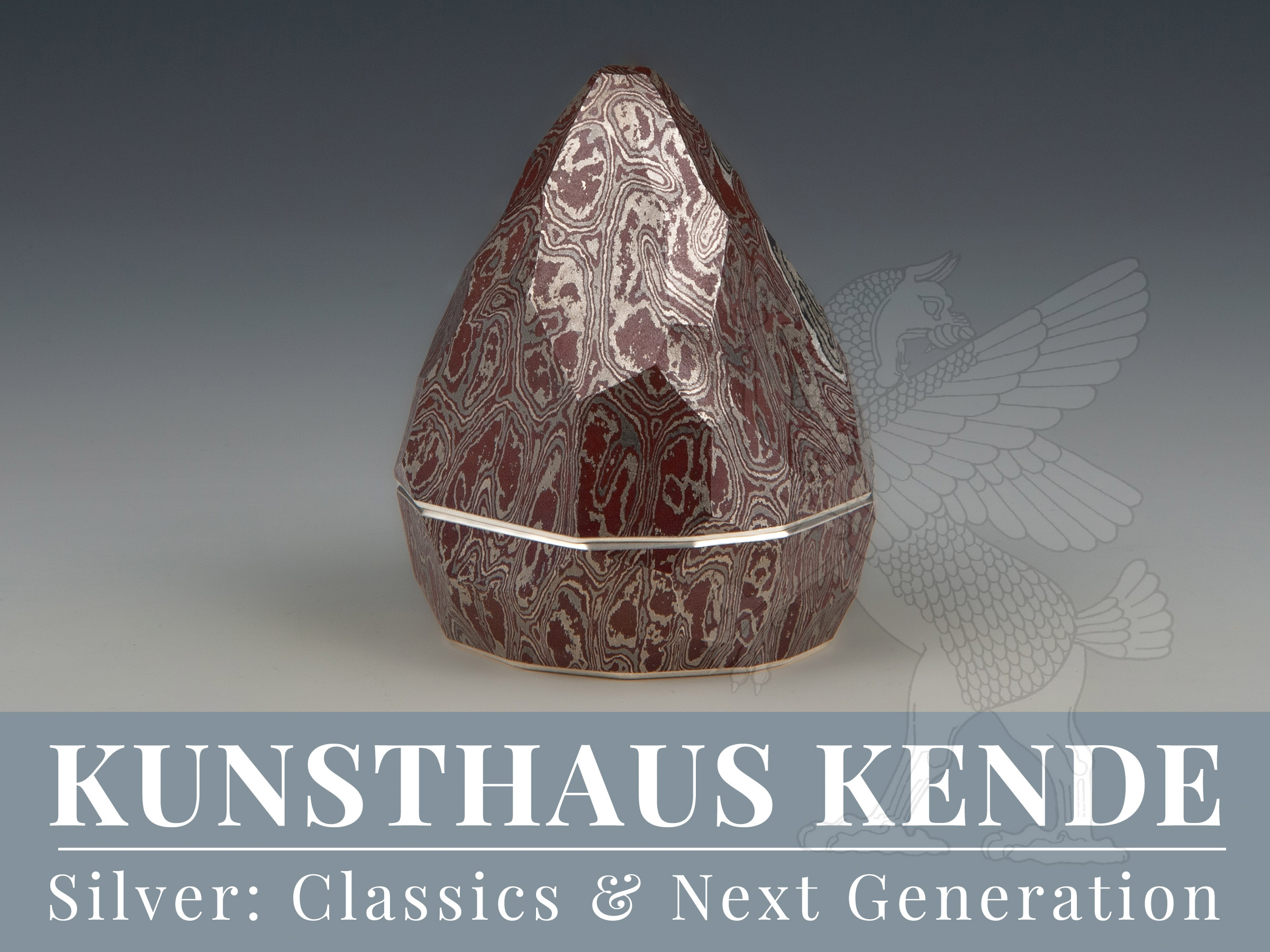
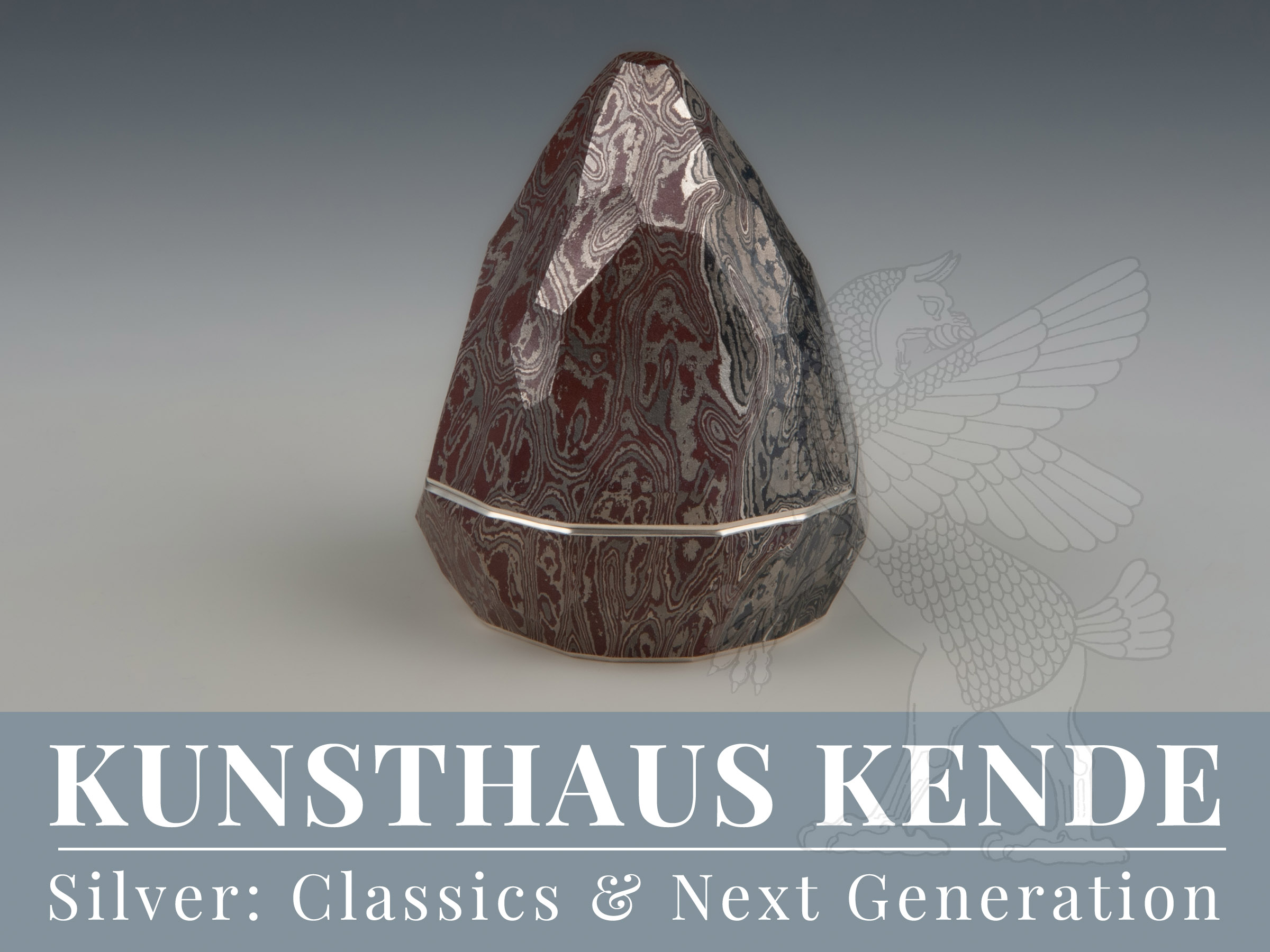
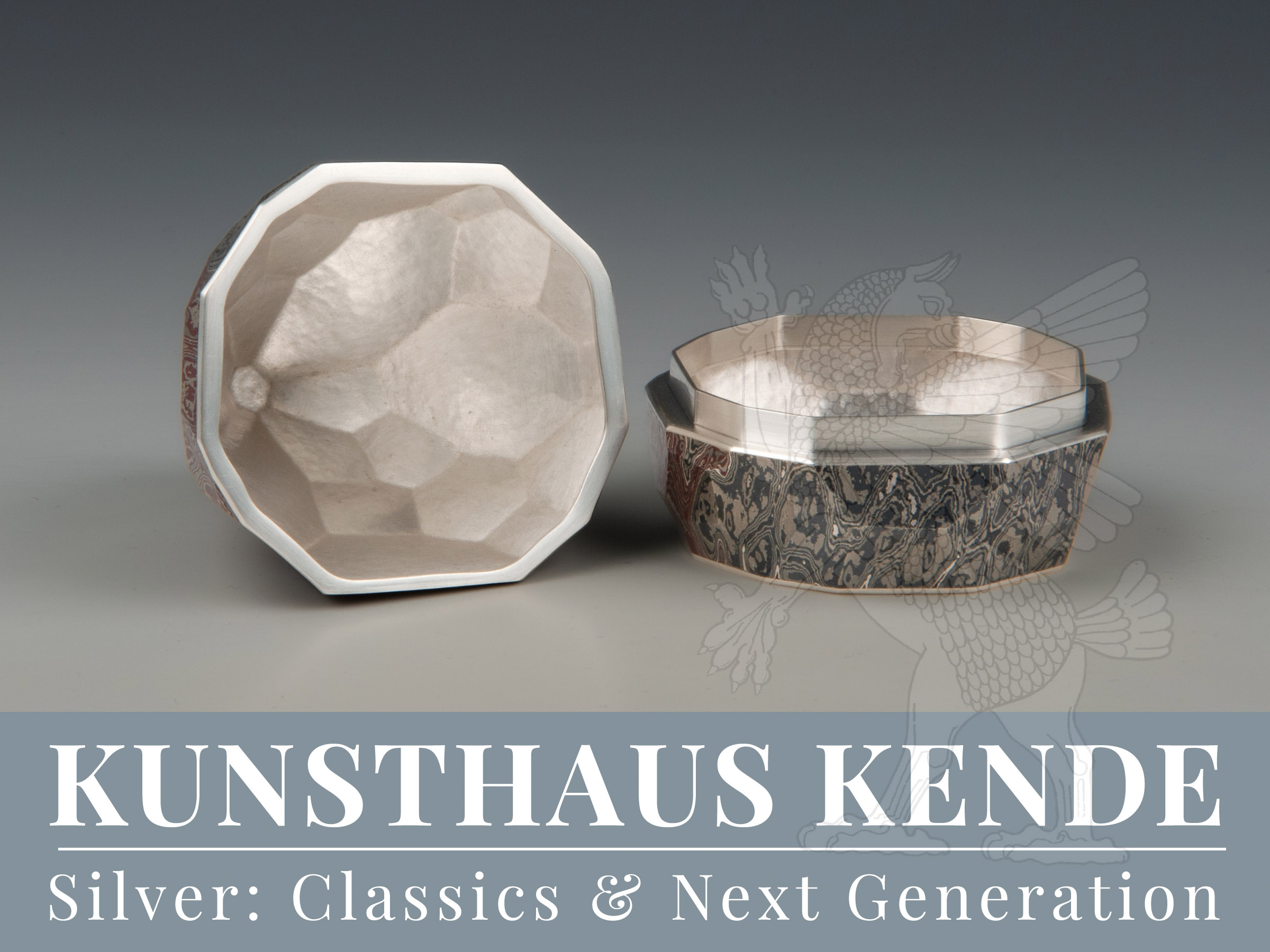
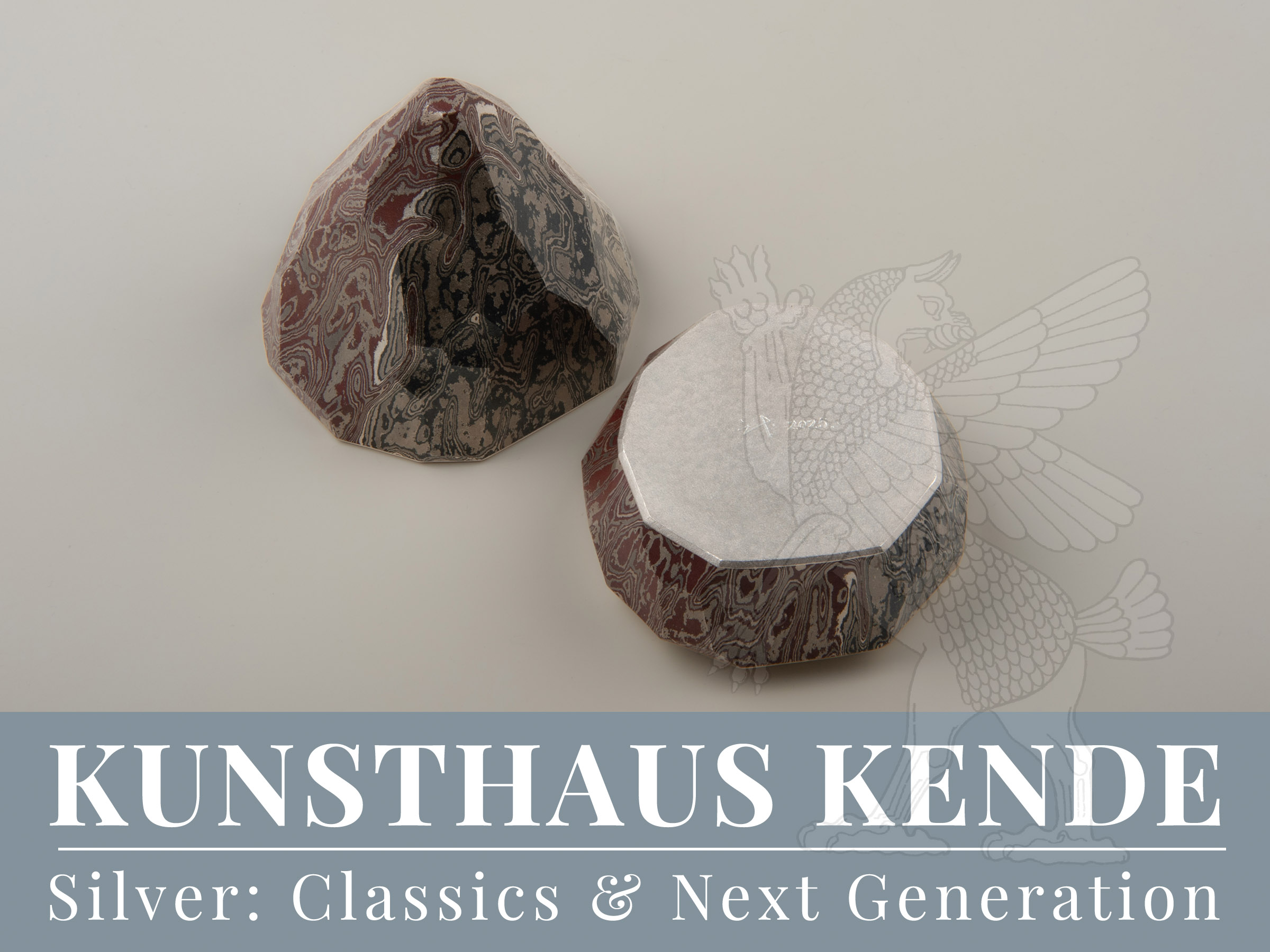
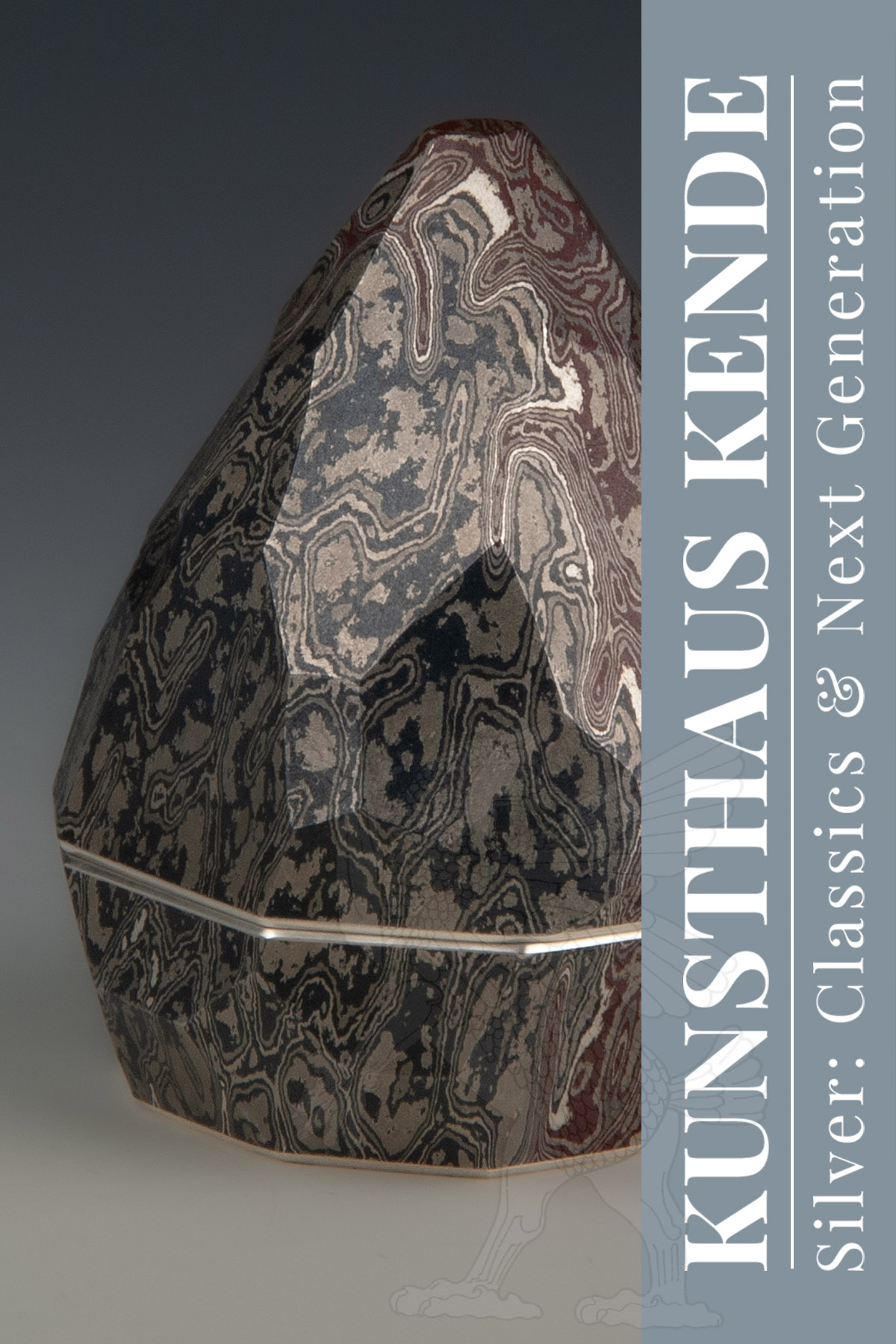
An outstanding Mokume-gane lidded box,
Silver, Copper, Shakudo, Shibuichi, Kuromido,
Okayama 2025 by Ryuhei Sako
Dynamic, faceted body, with individual planes extending into both the base and lid sections. The object is housed in a traditional tomobako (wooden storage box) signed by the artist.
An exceptionally elegant lidded box by one of Japan’s most important contemporary artists working in Mokume-gane.
Beyond the inherently demanding and highly complex production of the material itself, this work is distinguished by its remarkable technical execution. Despite this, the faceting is executed with extraordinary precision, including those facets that extend across both the base and the lid.
8.5 cm / 3.35″ height, 6.9 cm / 2.72″ maximum diameter
For the making of this lidded box, Ryuhei Sako employed, in addition to fine silver (999) and pure copper, the traditional Japanese metal alloys shakudō, kuromidō and shibuichi. Shakudō is a copper–gold alloy containing approximately 1–5% gold. Kuromidō refers to a traditionally processed, unrefined copper which may, depending on its origin, contain trace elements such as antimony or iron. Shibuichi is an alloy of silver and copper.
The surface was subsequently refined using the traditional Japanese patination technique niiro. This process accentuates the distinct properties of the individual alloys and intensifies their chromatic contrasts: copper assumes a warm reddish-brown tone, kuromidō becomes deep black, shakudō develops a bluish-black hue, and shibuichi takes on a muted grey whose tone varies according to its silver content. Gold and silver, by contrast, retain their natural colour.
The historical development of Mokume-gane
Mokume-gane is a traditional Japanese metalworking technique that emerged in the early Edo period, during the early seventeenth century. Through the forge-welding of differently coloured metal alloys, characteristic patterns are created that evoke the appearance of wood grain.
In its origins, this highly complex technique was primarily employed in the production of refined sword fittings, most notably tsuba (hand guards). With the decline of the samurai culture and the subsequent disarmament of the population, mokume-gane gradually lost its original function and fell into relative obscurity for an extended period.
The manufacture of Mokume-gane
Mokume-gane literally translates as “wood grain metal”, referring to the woodgrain-like patterns that emerge in the finished surface. Alongside itame-gane and masame-gane, it belongs to the traditional Japanese laminate metalworking techniques and is conceptually comparable to Damascus steel. In this process, multiple thin layers of different metals are forge-welded into a single block.
Whereas itame-gane produces circular, wood-ring-like patterns and masame-gane results in linear structures, mokume-gane achieves its distinctive organic grain through the deliberate engraving and drilling of the laminated block. During the subsequent forging down into a thin sheet, these recesses are stretched and transformed into the characteristic decorative pattern.
The technique is considered one of the most demanding disciplines in metal artistry. The various alloys must be heated to just below their respective melting points in order to bond permanently without losing structural integrity. The differing melting ranges, combined with the subsequent forging process, require exceptional precision, extensive experience and a highly refined sensitivity to the material. The resulting sheets are then used as the basis for the individual objects.
The artist silversmith Ryuhei Sako
Ryuhei Sako was born in 1976 in Okayama (Okayama Prefecture, southern Japan). During his studies, an exhibition of works by Norio Tamagawa sparked his interest in the mokume-gane technique. He began to specialise in metalwork in his third year of study. In 1999, he graduated with a Bachelor’s degree from the Faculty of Art at Hiroshima City University and continued his studies at the university’s Graduate School of Art, completing his Master’s degree in 2002. In 2003, he established his workshop in Tamano City; in 2005 he relocated it to Okayama City, where he continues to work today. Since 2004, he has been a member of the Japan Art Crafts Association.
His decision to specialise in mokume-gane was already formed during his studies. As there were very few accessible masters of the technique at the time, Sako initially acquired his knowledge through historical sources and specialist literature. His true artistic and technical development took place over the following years in his own workshop, extending across more than a decade of intensive experimental practice.
Today, Sako is regarded as an internationally recognised specialist in mokume-gane. His works combine traditional Japanese metal artistry with a contemporary formal language, often drawing on classical vessel forms and reinterpreting them. Through continuous material-based research, he has further explored the chromatic potential of alloys such as shakudō and shibuichi, systematically expanding their tonal variations.
In view of his outstanding artistic achievement, it is hardly surprising that his work has been honoured by several awards. His artworks form part of the inventory of the Victoria & Albert Museum, London, the Ashmolean Museum of Art and Archaeology, Oxford as well as of the Metropolitan Museum of Art, New York.