Item number: 60241
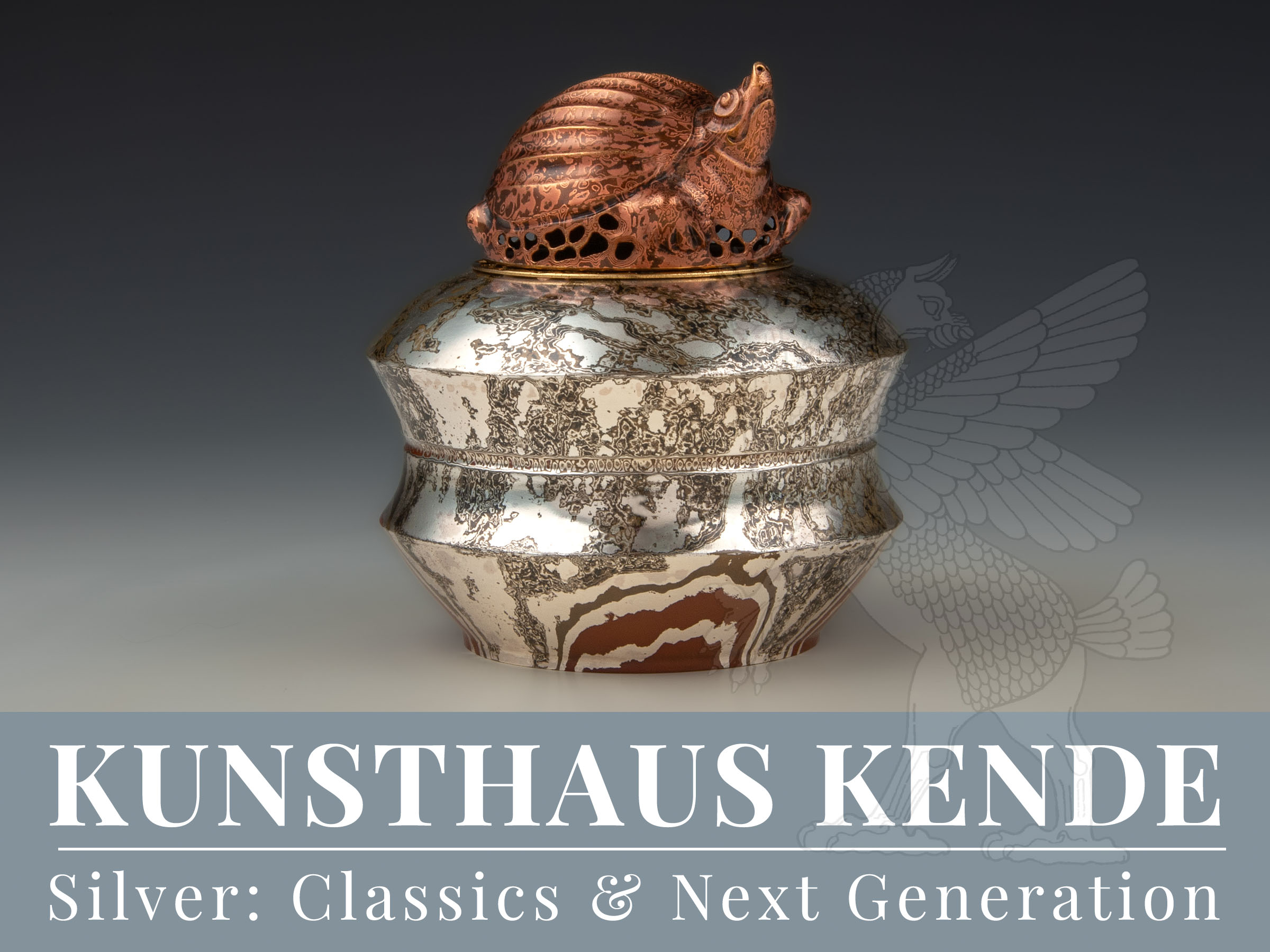
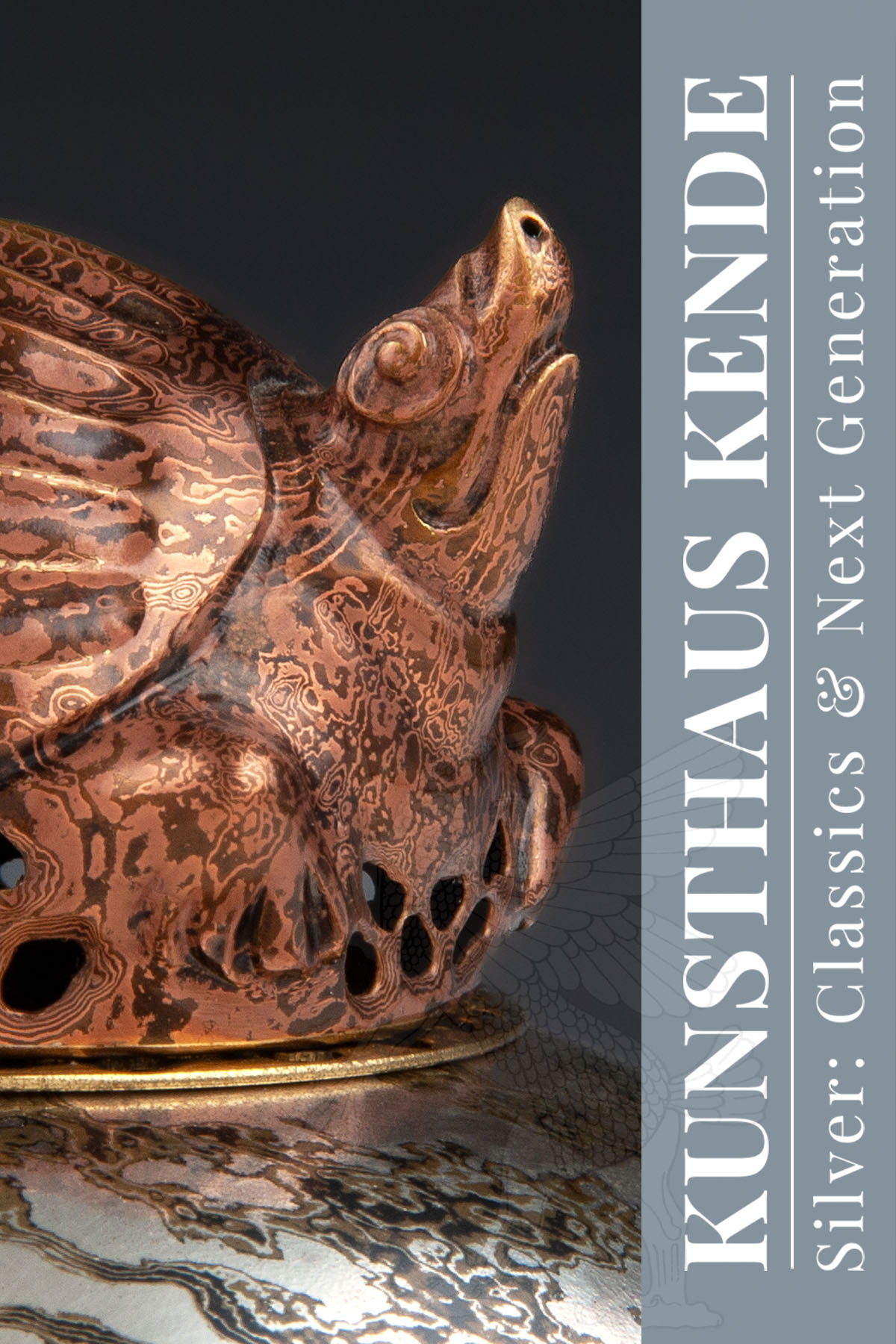
Exceptional Mokume-gane incense burner 亀 (Kame) – Turtle,
Fine silver, copper, bronze, brass,
Kanazawa 2022 by Satoshi Hara
The body, circular in cross-section and shaped as a compressed sphere, is articulated by a surface worked into alternating convex and concave horizontal bands. The recessed central section is embellished with correspondingly concave bands of copper and silver.
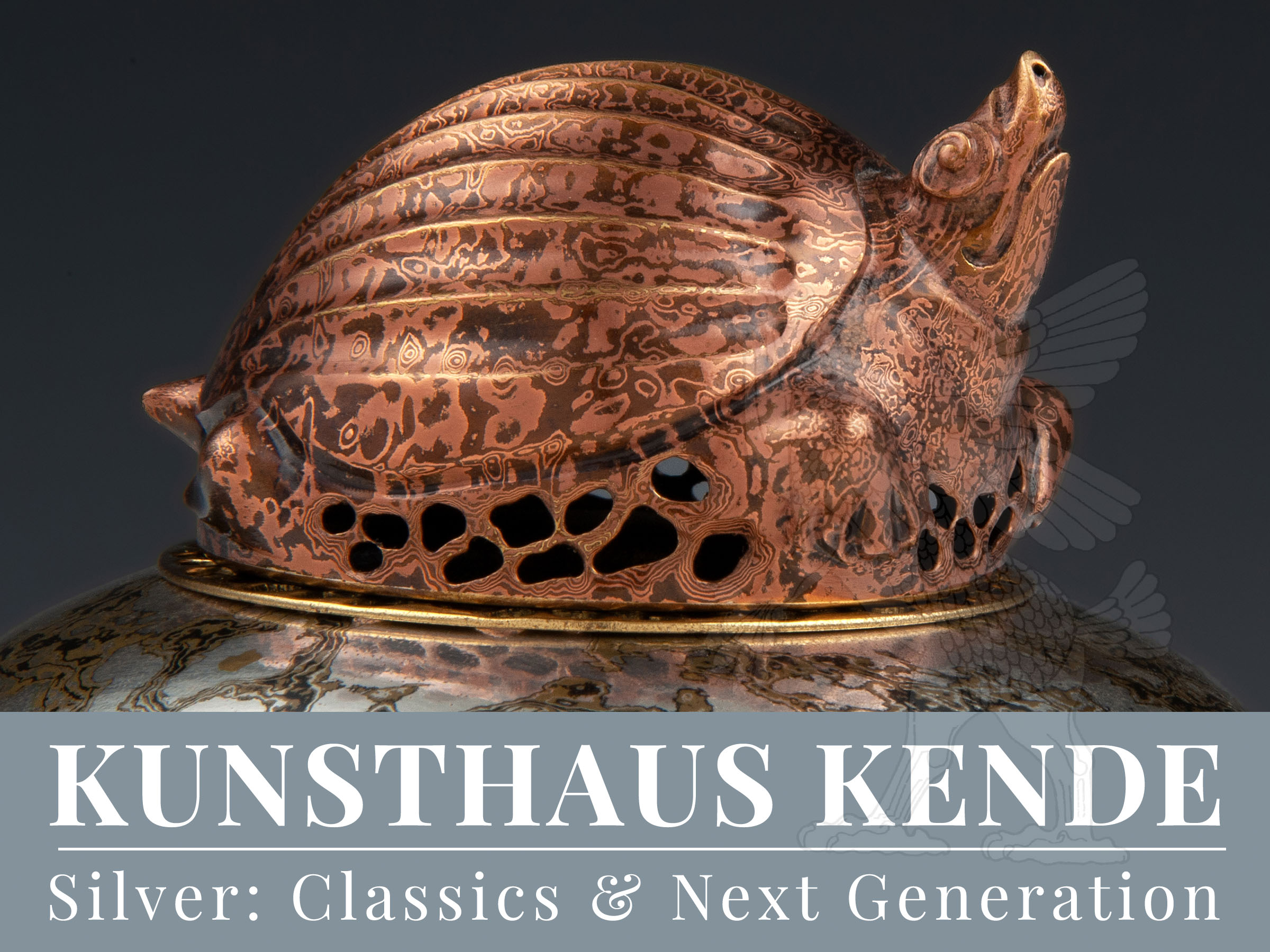
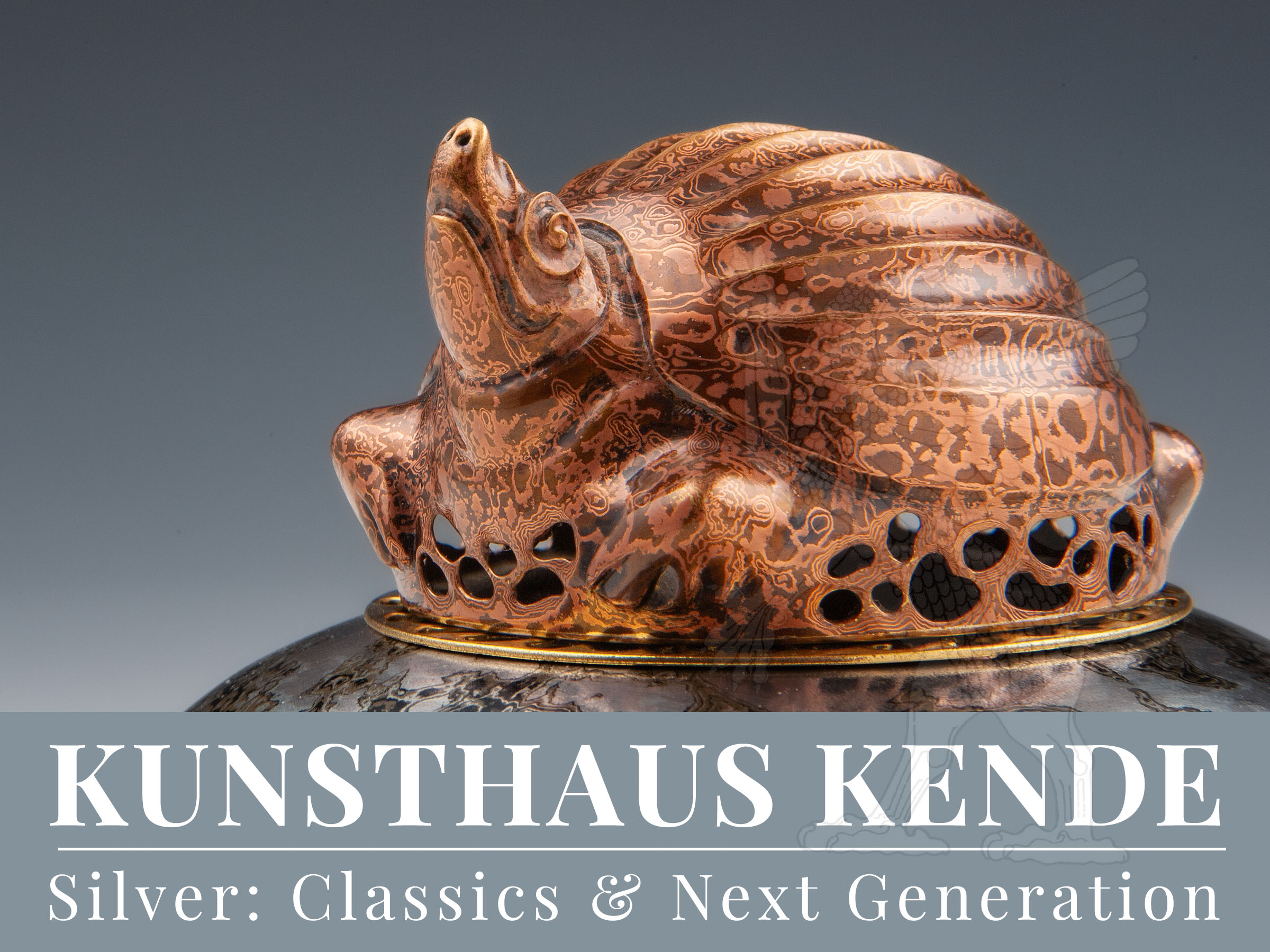
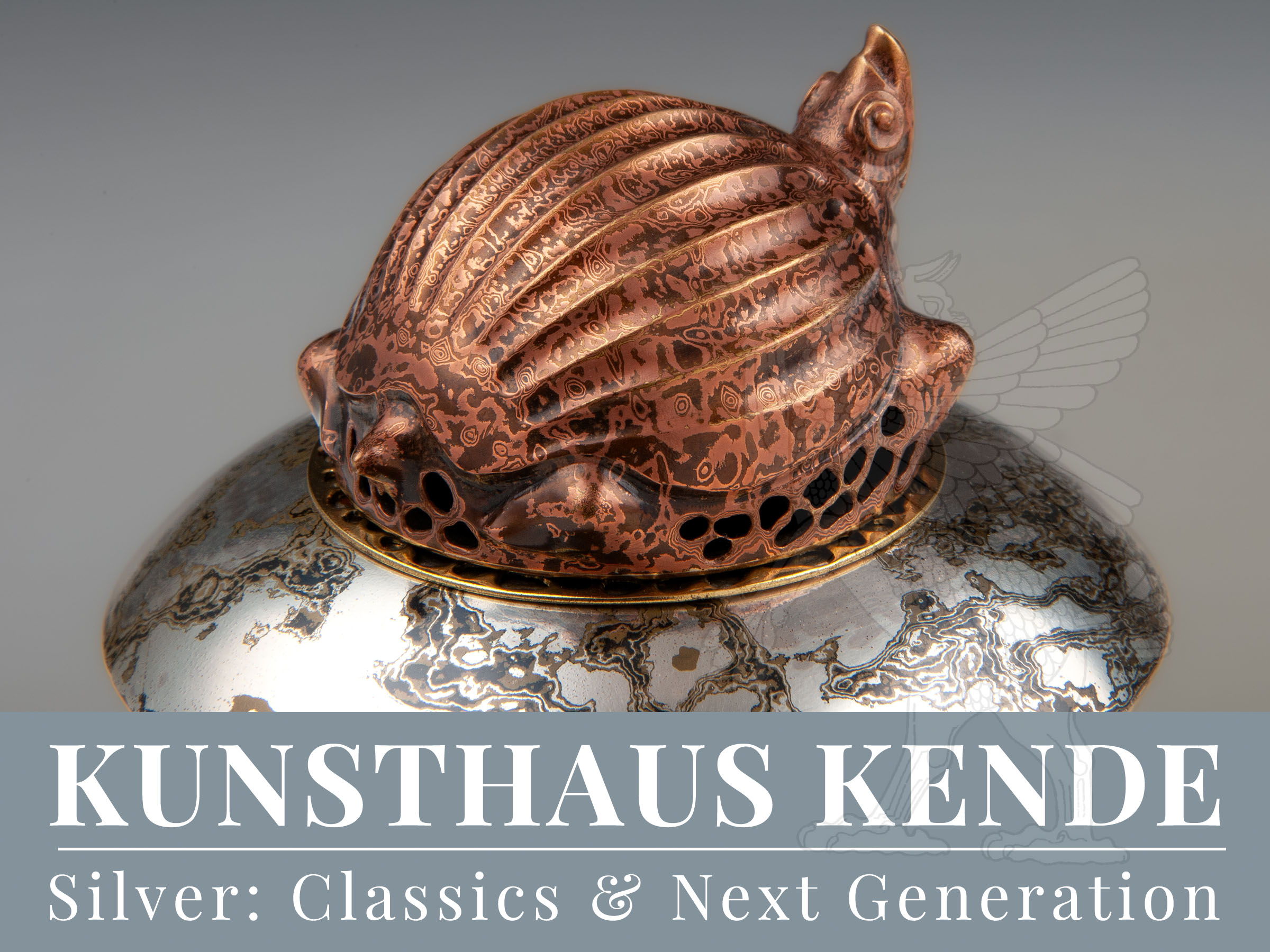
Above it rises a pierced superstructure in the form of a tortoise, mounted upon a recessed brass container.
The work is distinguished by its masterful execution in Mokume-gane – a technique as demanding as it is fascinating, the mastery of which in itself requires an exceptional degree of technical virtuosity. In this example, however, particular attention is drawn to the tortoise, repoussé-worked with an almost surgical degree of precision. Executed in Mokume-gane using brass and copper, this animal representation reveals the highest level of artistic accomplishment, most notably in the intricately rendered folds and contours of the tortoise’s shell, as well as in the modelling of its face and eyes.
A remarkably inventive yet subtly humorous solution to the evacuation of smoke is provided by the two openings in the tortoise’s nostrils.
Diameter: cm; Height: cm (details follow soon)
In Japanese mythology and culture, the tortoise is regarded as a symbol of longevity, wisdom, good fortune and protection. Owing to its proverbial lifespan, it also embodies endurance and immortality, and is traditionally regarded as an auspicious emblem.
The Japanese metal artist Satoshi Hara
Born in Yokohama, Kanagawa Prefecture, in 1962, the artist specialises in producing wrought ironwork in which he inserts gold and silver decorations into the walls of vessels using an extremely difficult and labour-intensive technique. This highly developed inlay technique makes the decorations look as if they have been drawn with a thin pen. Hara created his own technique, which he called ‘Nanako Zogan’. While “Zogan” refers to a metal inlay technique, ‘Nanako’ stands for a traditional technique that originated in the Nara period (710-794) and whose dotted appearance is reminiscent of fish roe.
Using this technique, the artist is able to inlay patterns into the vessels using silver wires with a thickness of 0.3 mm, with each individual line requiring five different steps. On average, a piece consists of 50 m of silver wire, meaning that the artist has to work with around 250 m of silver wire throughout the various stages of the process. In this highly complex and tedious work, the artist cannot afford to make a mistake at any point, as it is impossible to correct it. Satoshi Hara has held the professorship for metalworking at Kanazawa College of Art, Department of Craft, since 2003. His work can be found in numerous museums in Japan and abroad.