Item number: 60234
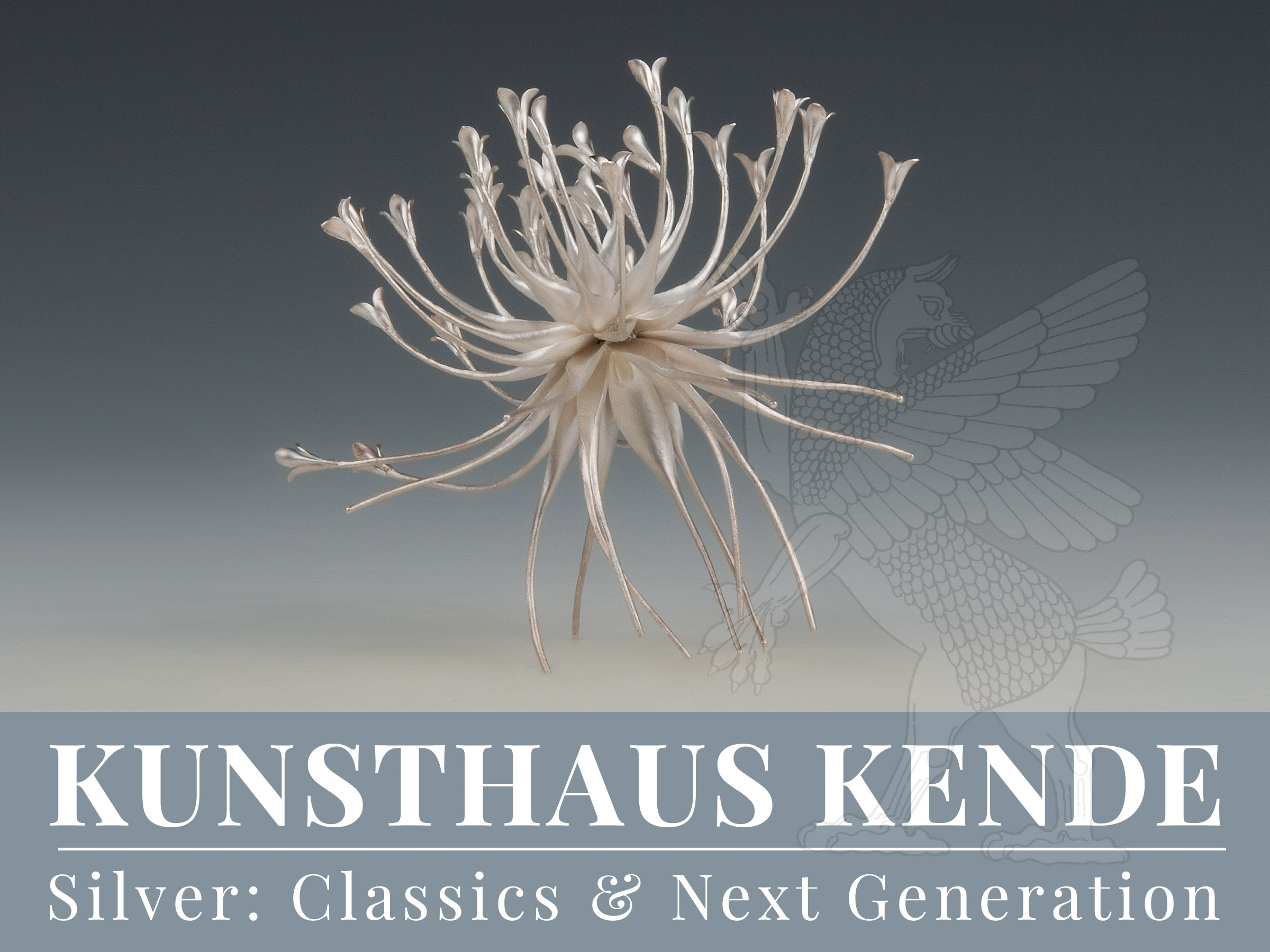
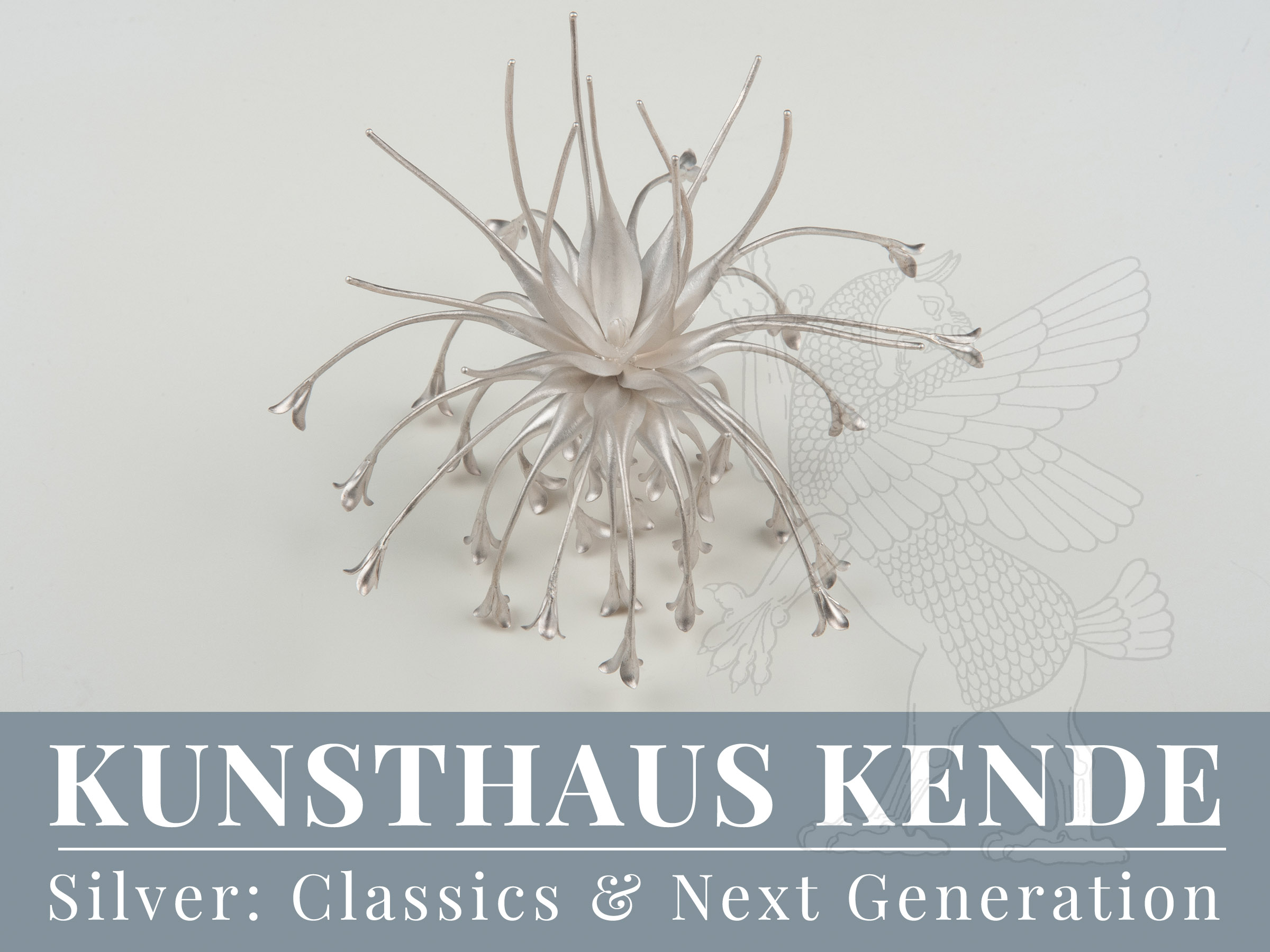
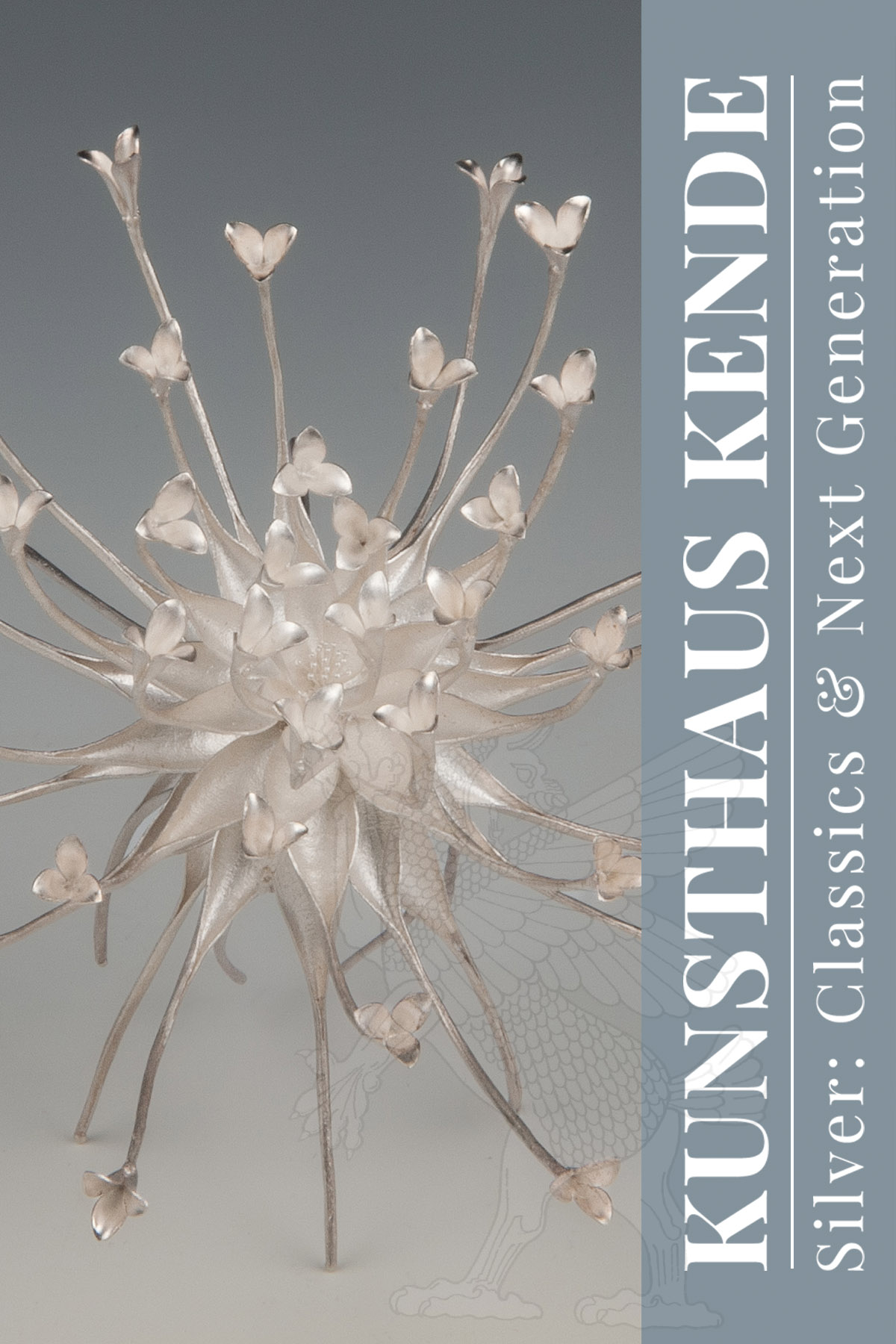
A contemporary 950 silver Okimono 萌芽 (Hōga) – Emergence,
Kanazawa 2026 by Toshiki Oda
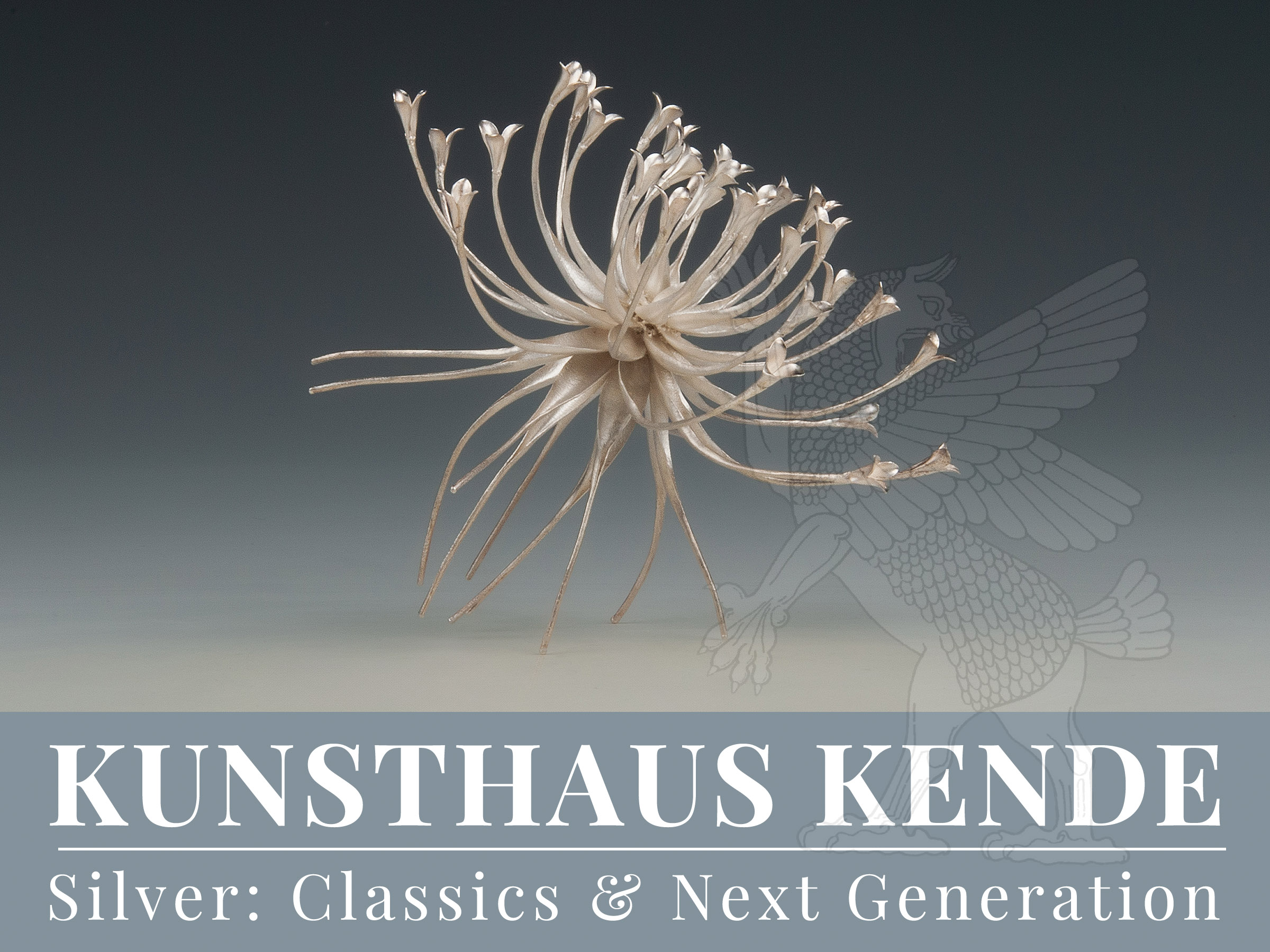
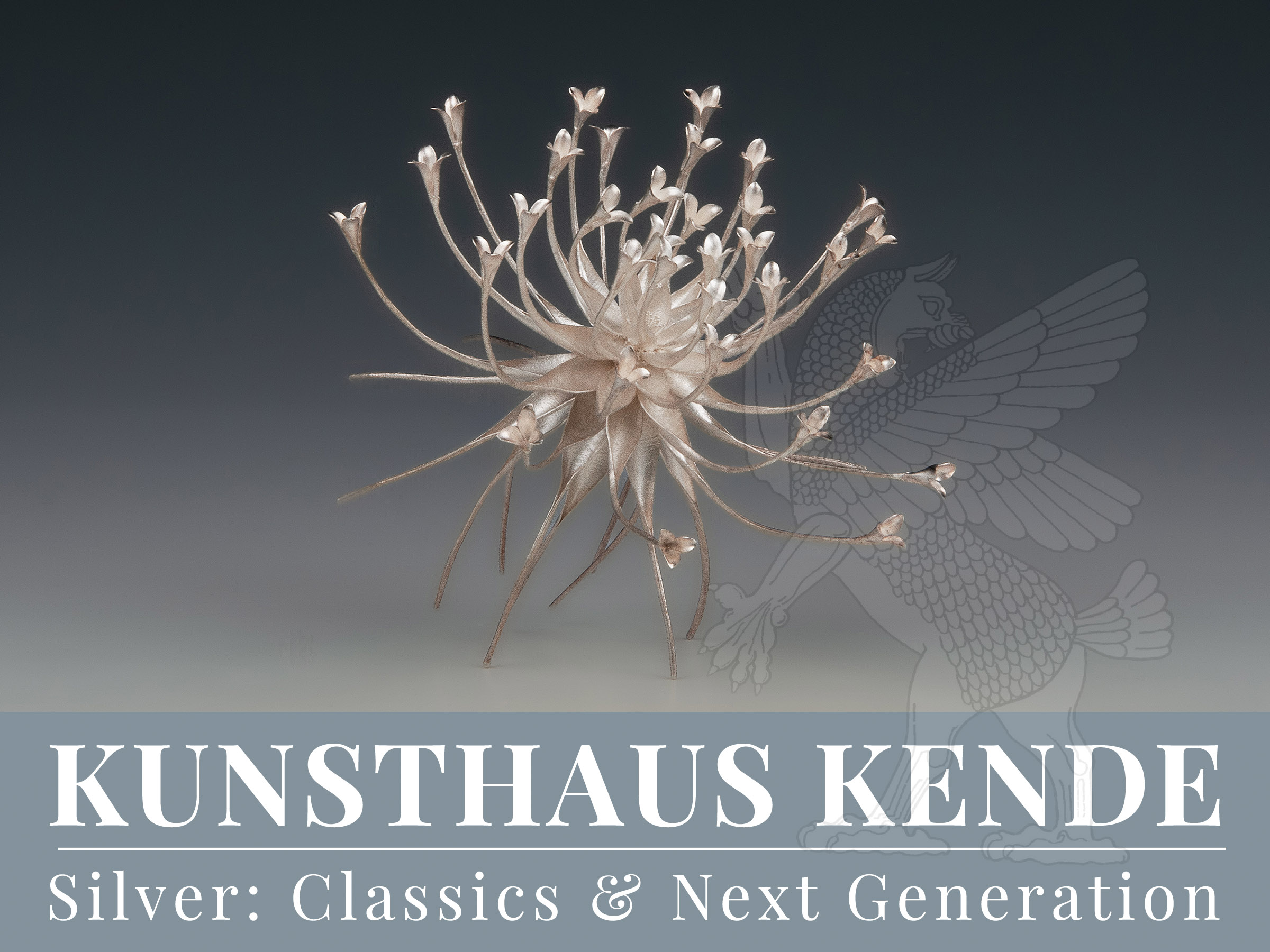
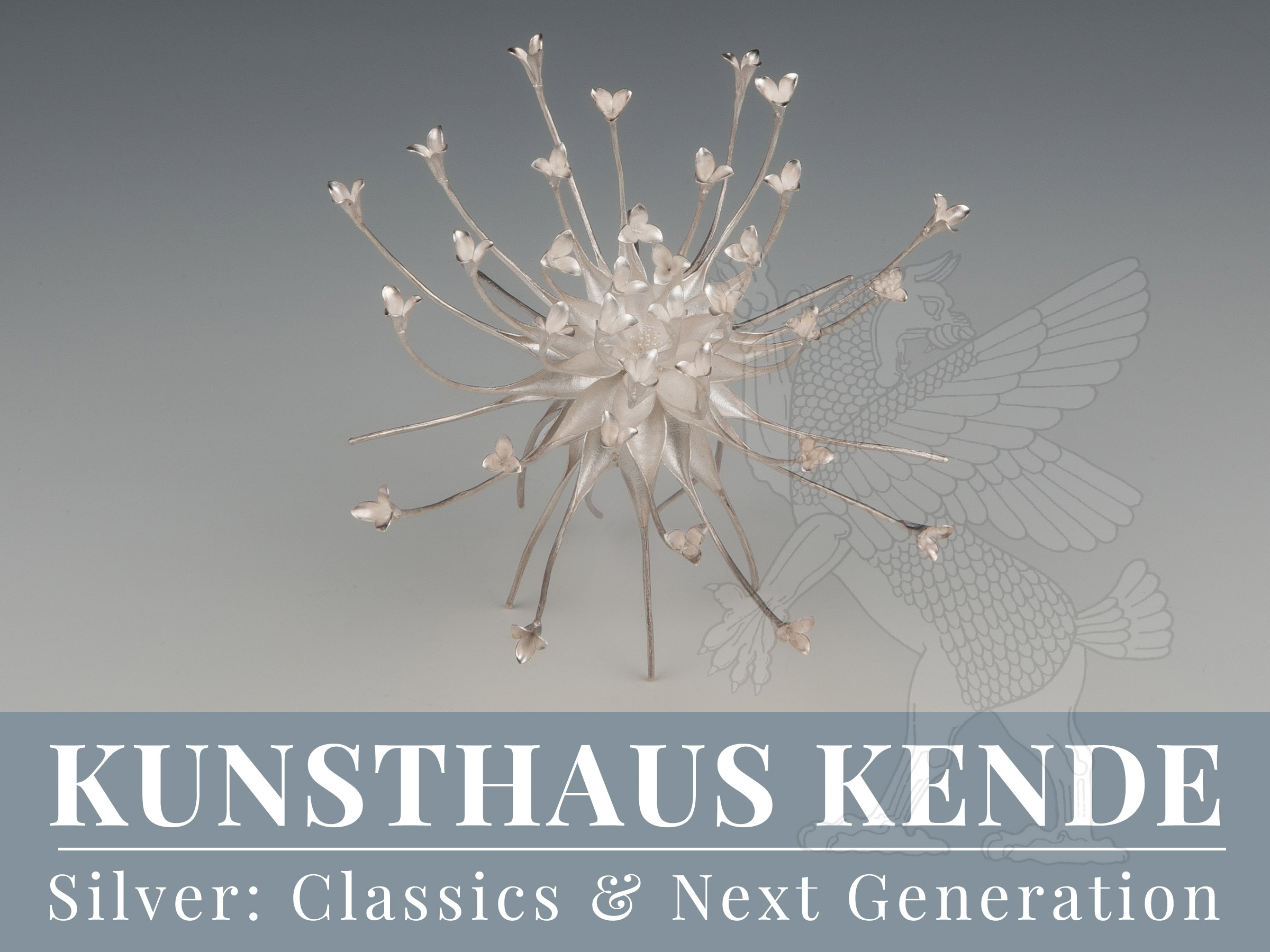
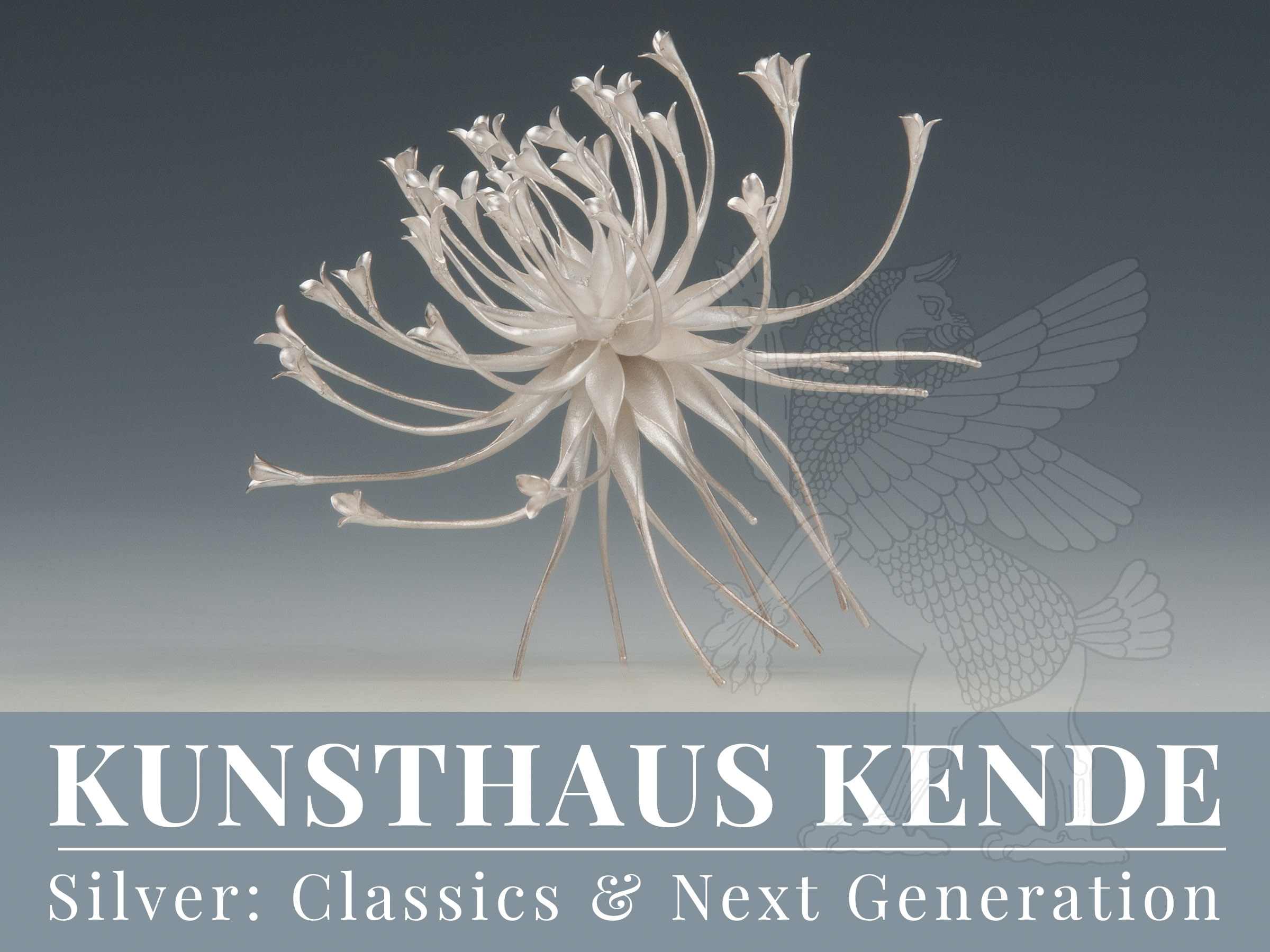
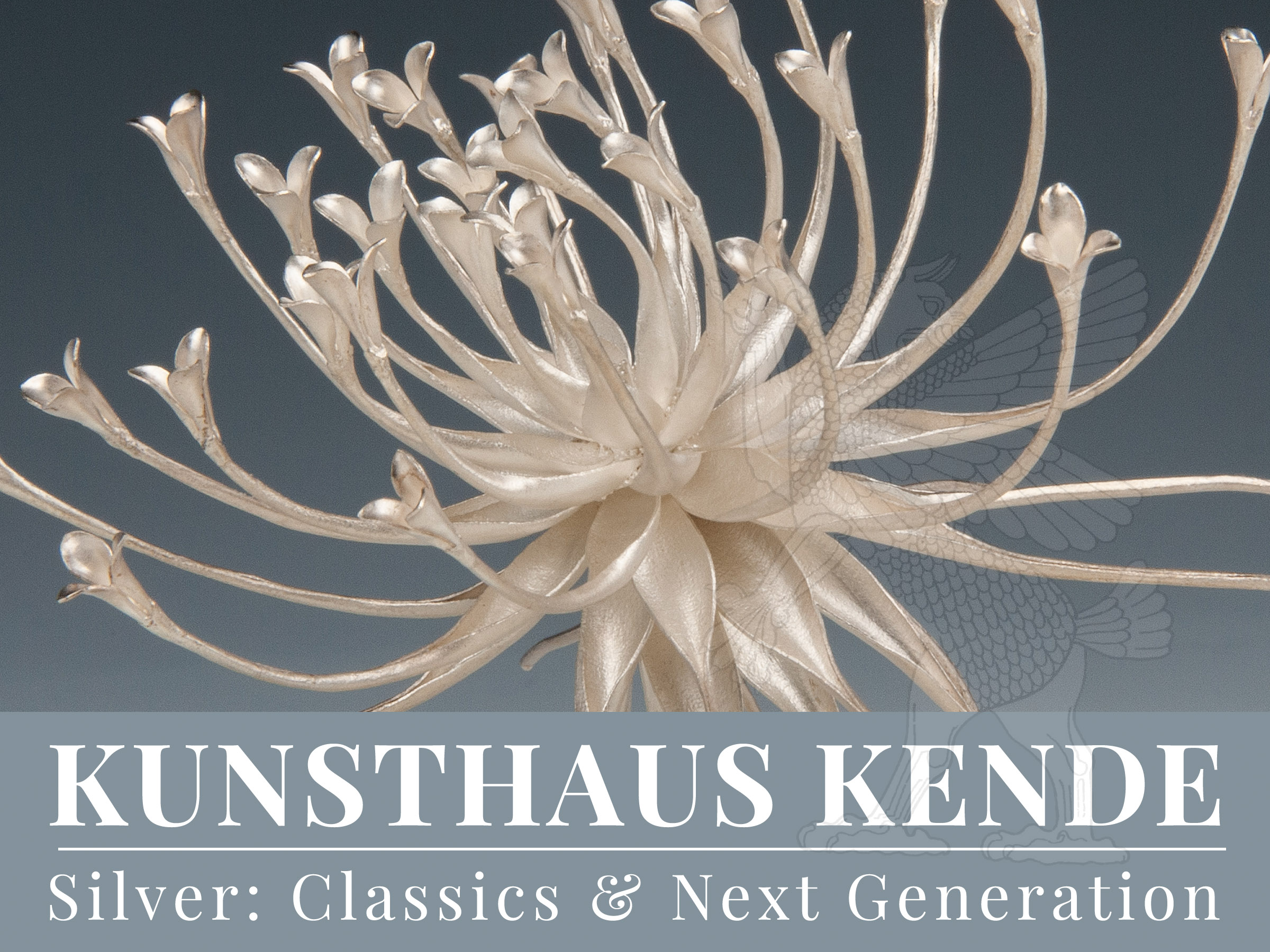
Hand-cut from 950 sterling silver and shaped through an elaborate repoussé process using hammers of varying fineness, this delicate silver sculpture unfolds an organic form reminiscent of a blossom with emerging young plant shoots. From a dense core, slender offshoots extend outward, branching into fine, chalice-shaped floral forms, while smaller, pointed foot-like structures develop towards the base. The exceptional precision of the craftsmanship lends the precious metal a surprising sense of lightness, rendering the silver almost animate.
Situated between botanical form and abstract contemporary metalwork, the piece explores themes of growth, transformation, and transience. Its matte, silvery sheen accentuates the impression of a frozen moment of natural unfolding, making the sculpture a striking synthesis of traditional Japanese craftsmanship, artistic innovation, and organic formal language.
The work is accompanied by a Tomobako (traditional Japanese wooden presentation box for storage and transport), signed and inscribed by the artist.
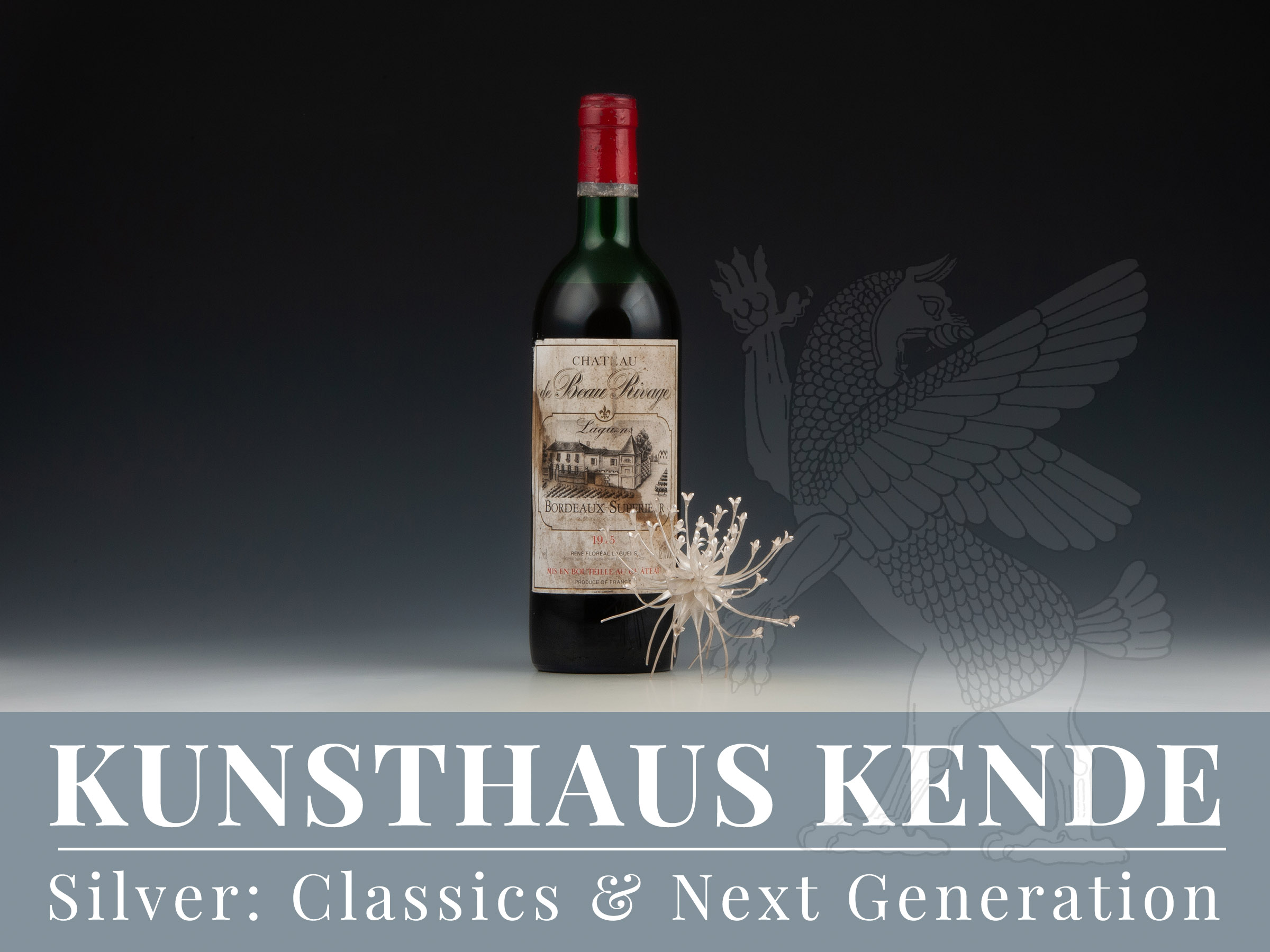
Approx. 9.0 cm / 3.54″ diameter, approx. 9.0 cm / 3.54″ height
The Development of Okimono as an independent art form
Okimono (置物) are among the most highly sought-after objects for collectors of Japanese art and fine Japanese sculpture, alongside netsuke. Originally conceived as decorative display objects for the tokonoma alcove or for formal reception spaces, they evolved during the Meiji period (1868–1912) into an independent art form of the highest level of craftsmanship. Masters of metalwork, wood carving, ivory carving, and lacquer art created highly detailed sculptures depicting animals, plants, mythological figures, or scenes from everyday life with extraordinary precision. International World Expositions in the second half of the 19th century brought okimono to global attention and established their reputation as a pinnacle of traditional Japanese art as well as Japanese craftsmanship. Today, alongside historical masterpieces, contemporary okimono continue to be produced, in which artists combine classical techniques with a modern visual language. As such, okimono continue to represent a unique synthesis of Japanese aesthetics, virtuosic handcraft, and artistic innovation.
The Japanese Artist Toshiki Oda
Toshiki Oda (born 1991 in Fukuoka, Japan) lives and works in Kanazawa. After completing his Bachelor’s degree in Industrial, Interior and Product Design at Musashino Art University (2015), he went on to earn a Master’s degree in Metalwork at the Kanazawa College of Art (2017). In 2020, he also completed the technical training programme at the Metalwork Studio of Kanazawa Utatsuyama Kogei Kobo.
In his artistic practice, Toshiki Oda explores the forms and processes of plant growth. Drawing on an intensive engagement with metal as a material and with traditional craft techniques, he develops sculptural works shaped by traces of the making process, the temporality of the material, and the narratives embedded within it. Whereas the artist had previously worked exclusively in iron and other metals, this work marks the first sculpture he has executed in silver.
His works are regularly presented at international art and craft fairs, including Art Fair Tokyo, Art Collaboration Kyoto, and KOGEI NEXT. He has also realised several solo exhibitions, among them in Kanazawa and Beijing. For his practice, he has received numerous awards, including the Encouragement Prize from the President of the Kanazawa Craft Association (2020), the Sokeikai Award (2019), and the World Craft City Declaration Commemorative Award (2018).